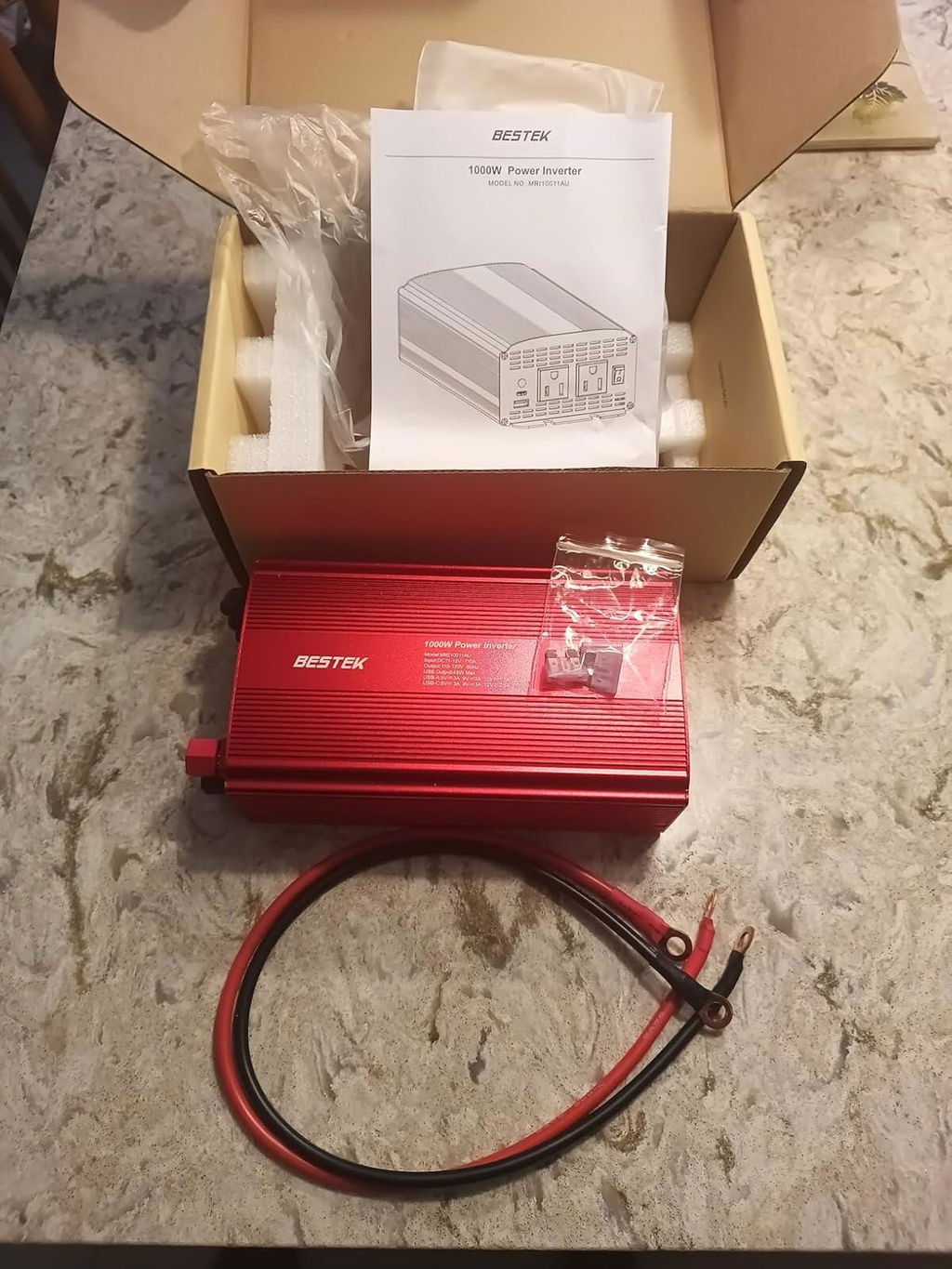
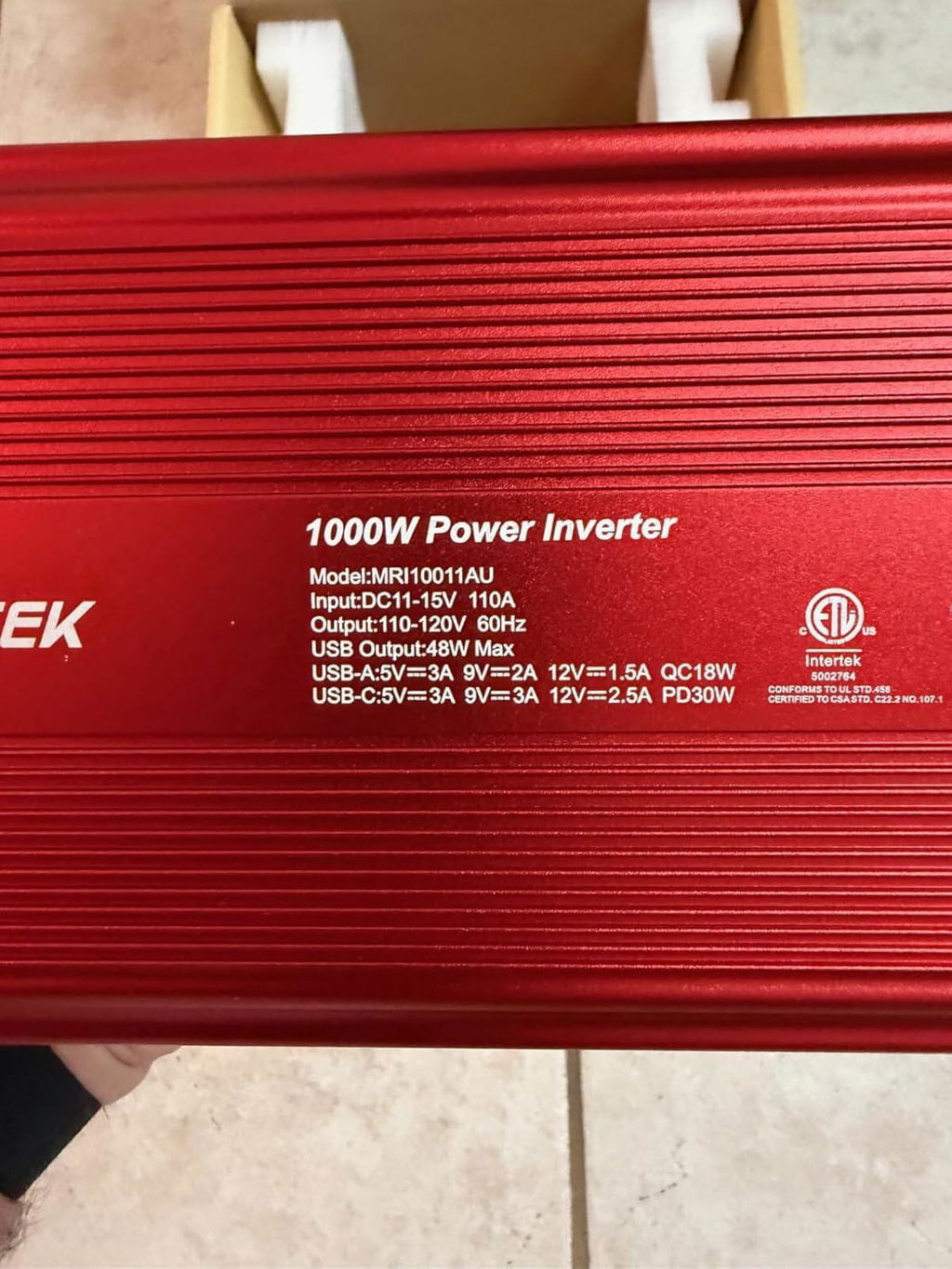
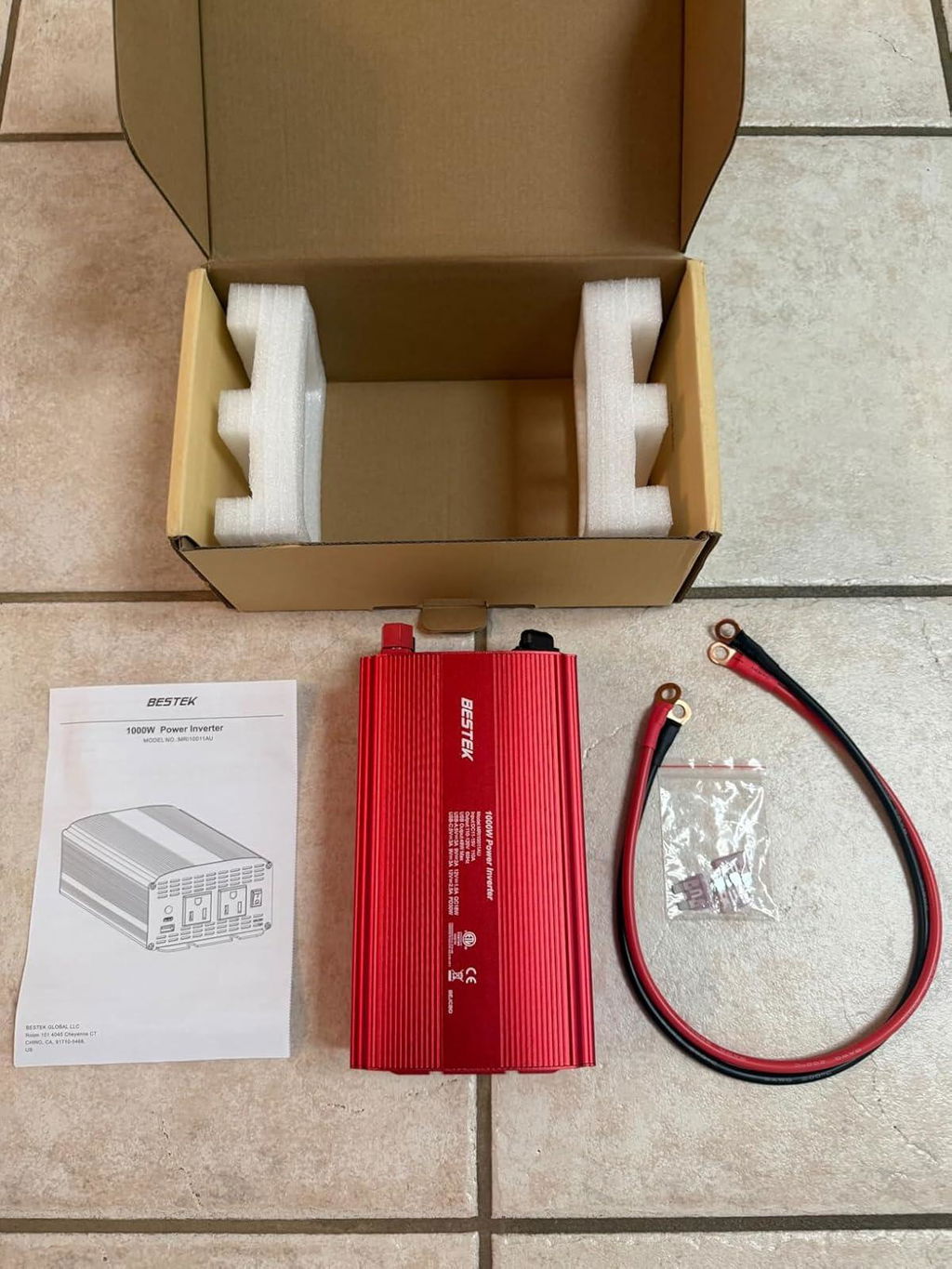
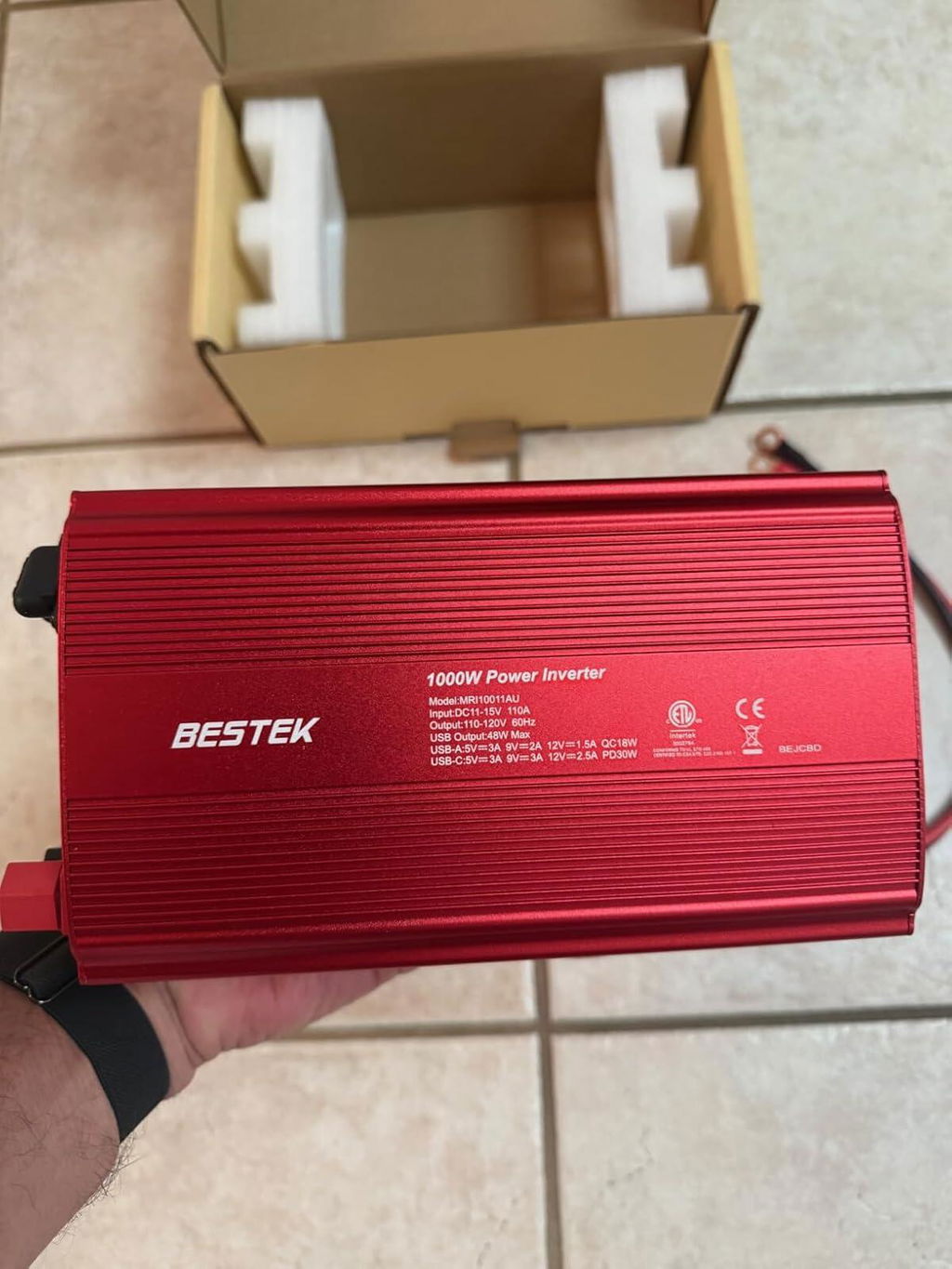
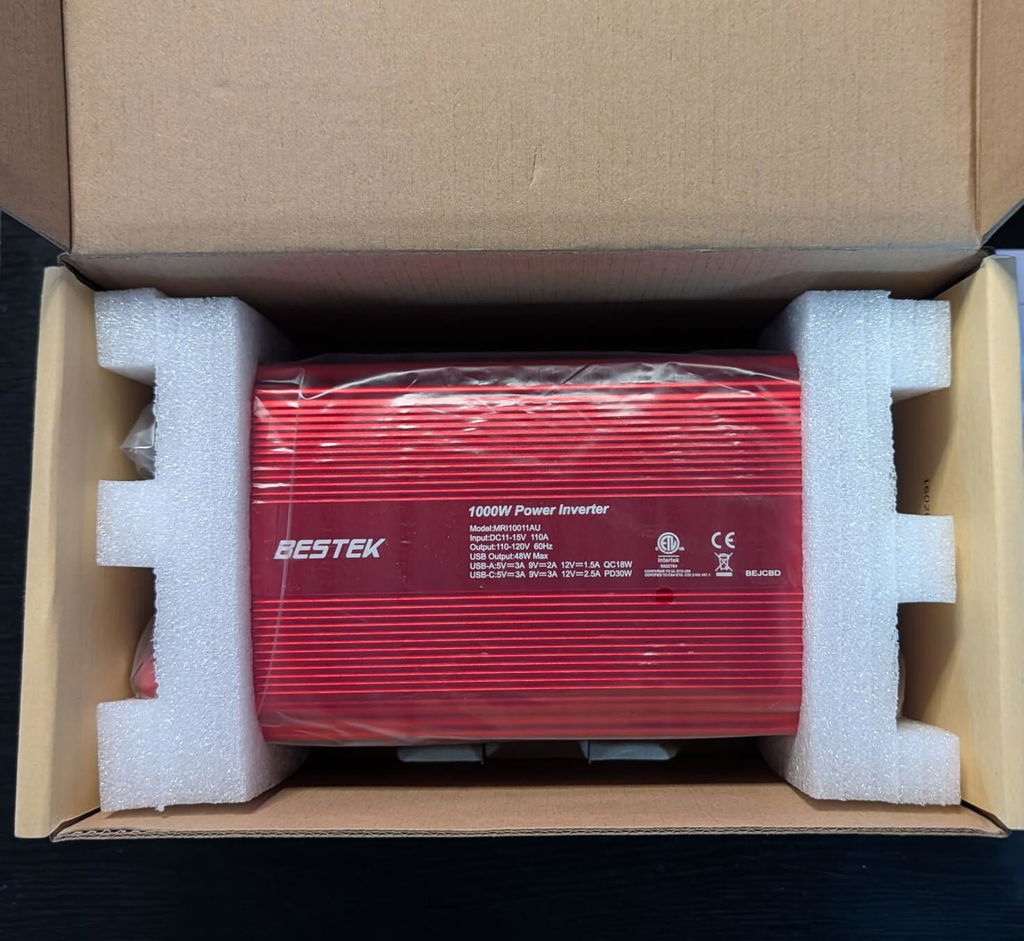
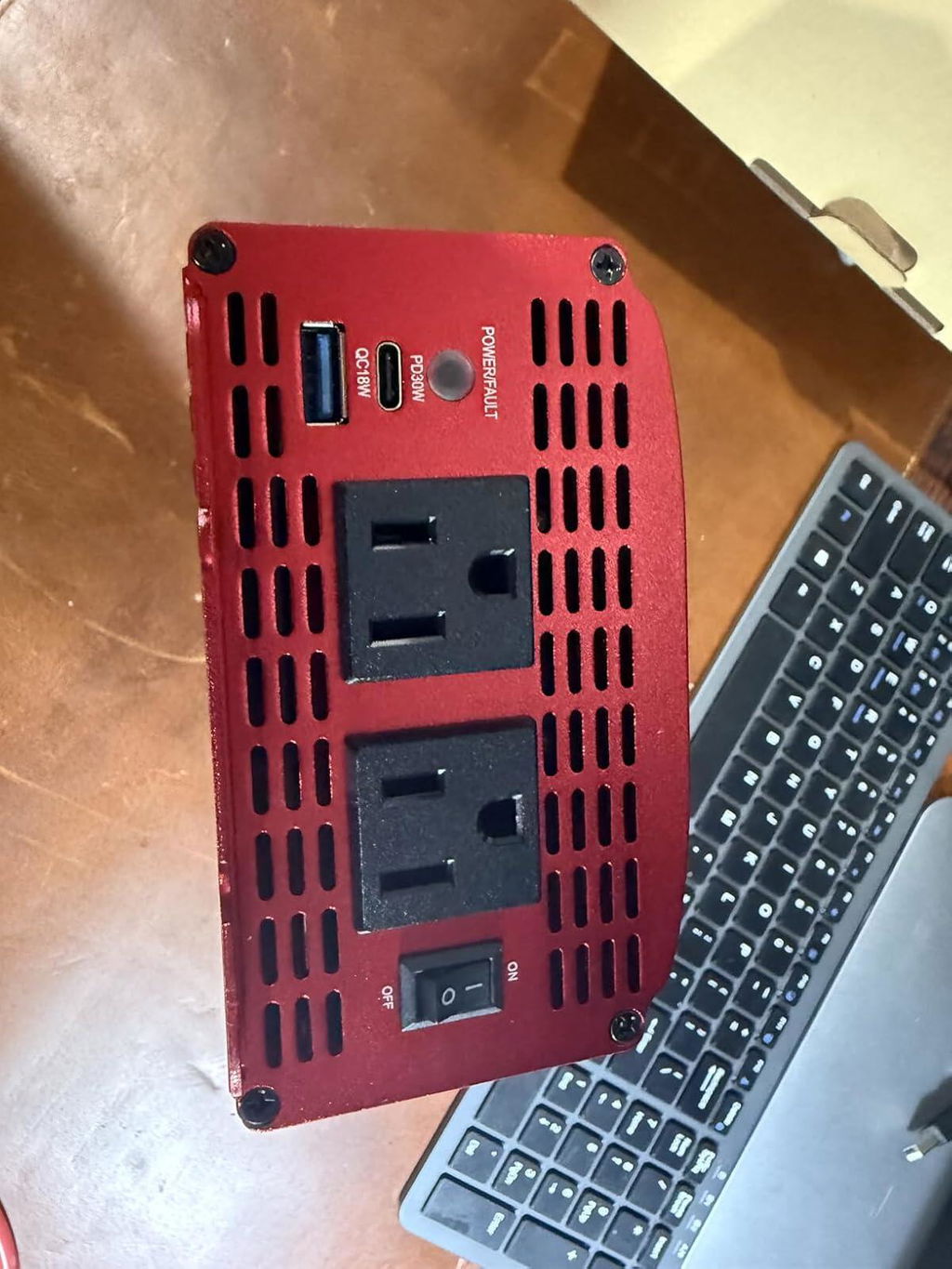
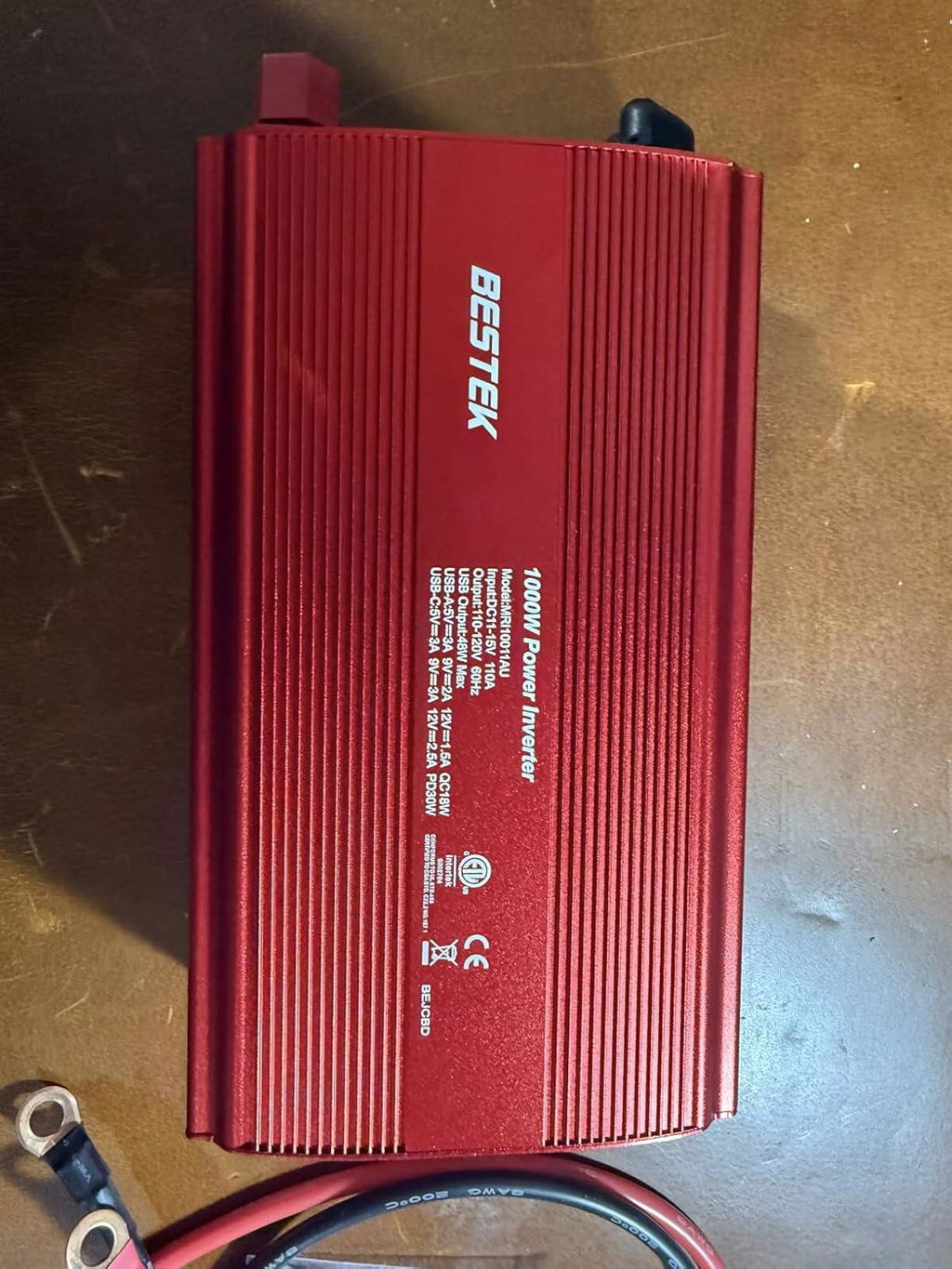
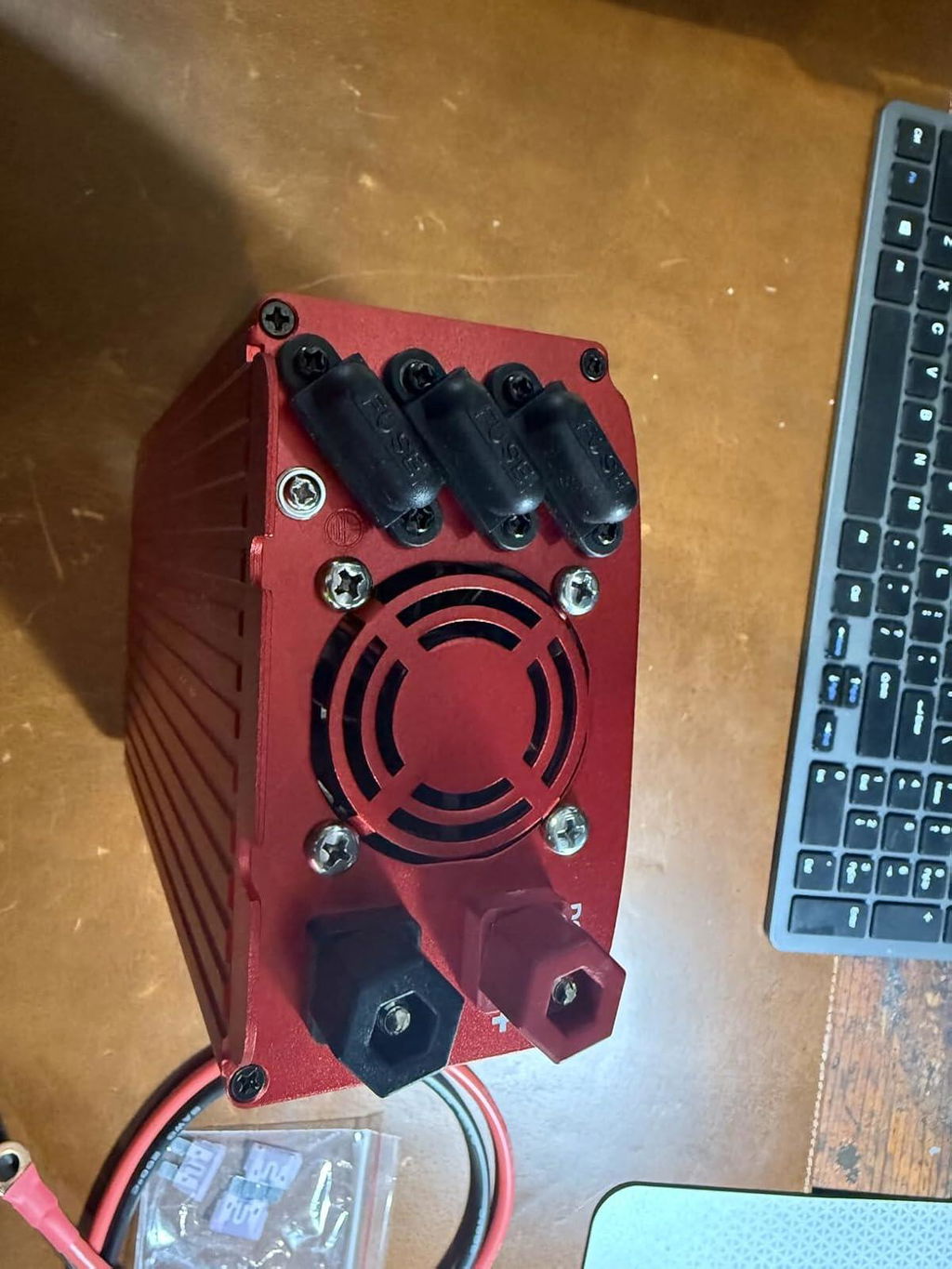
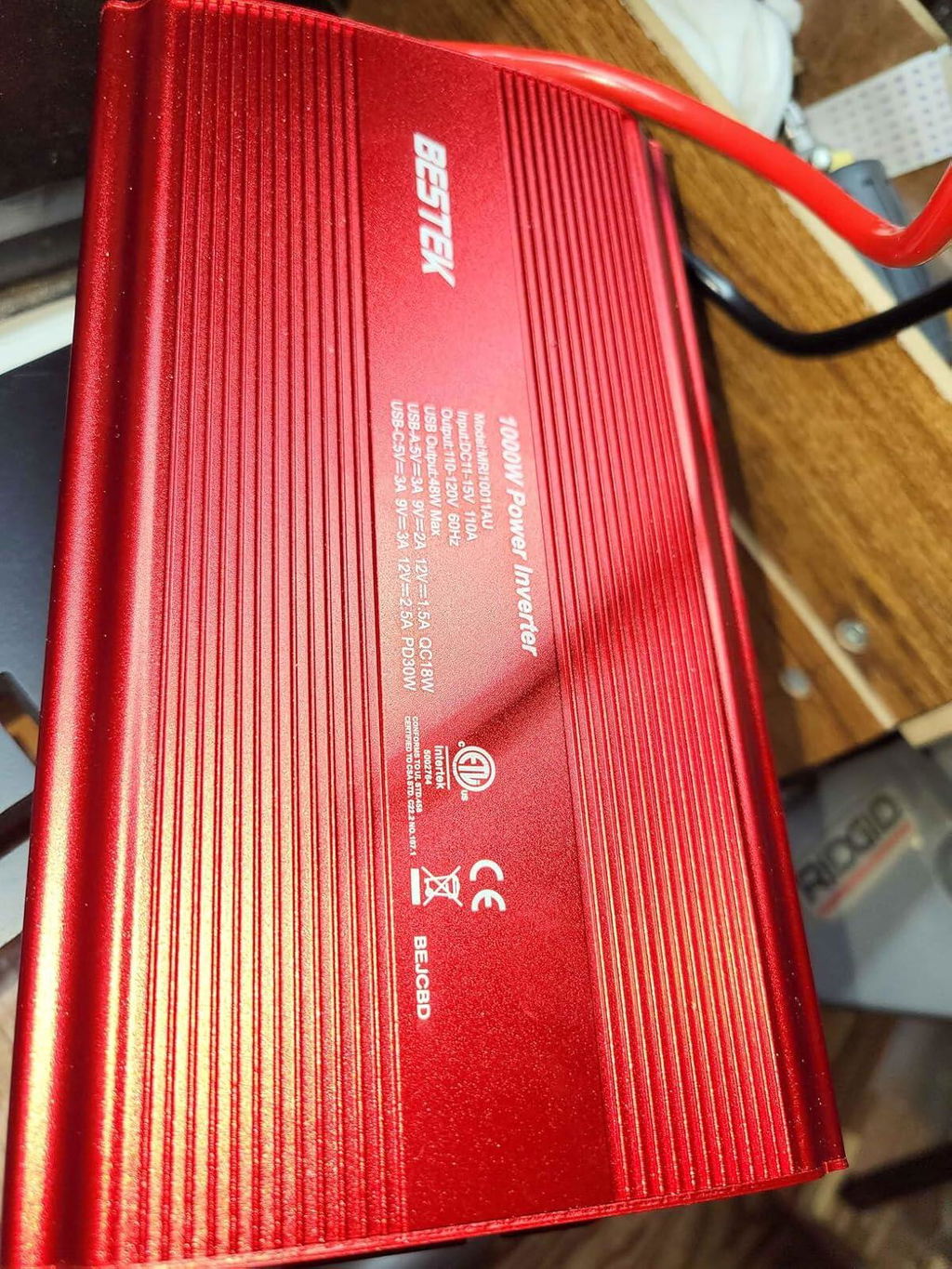
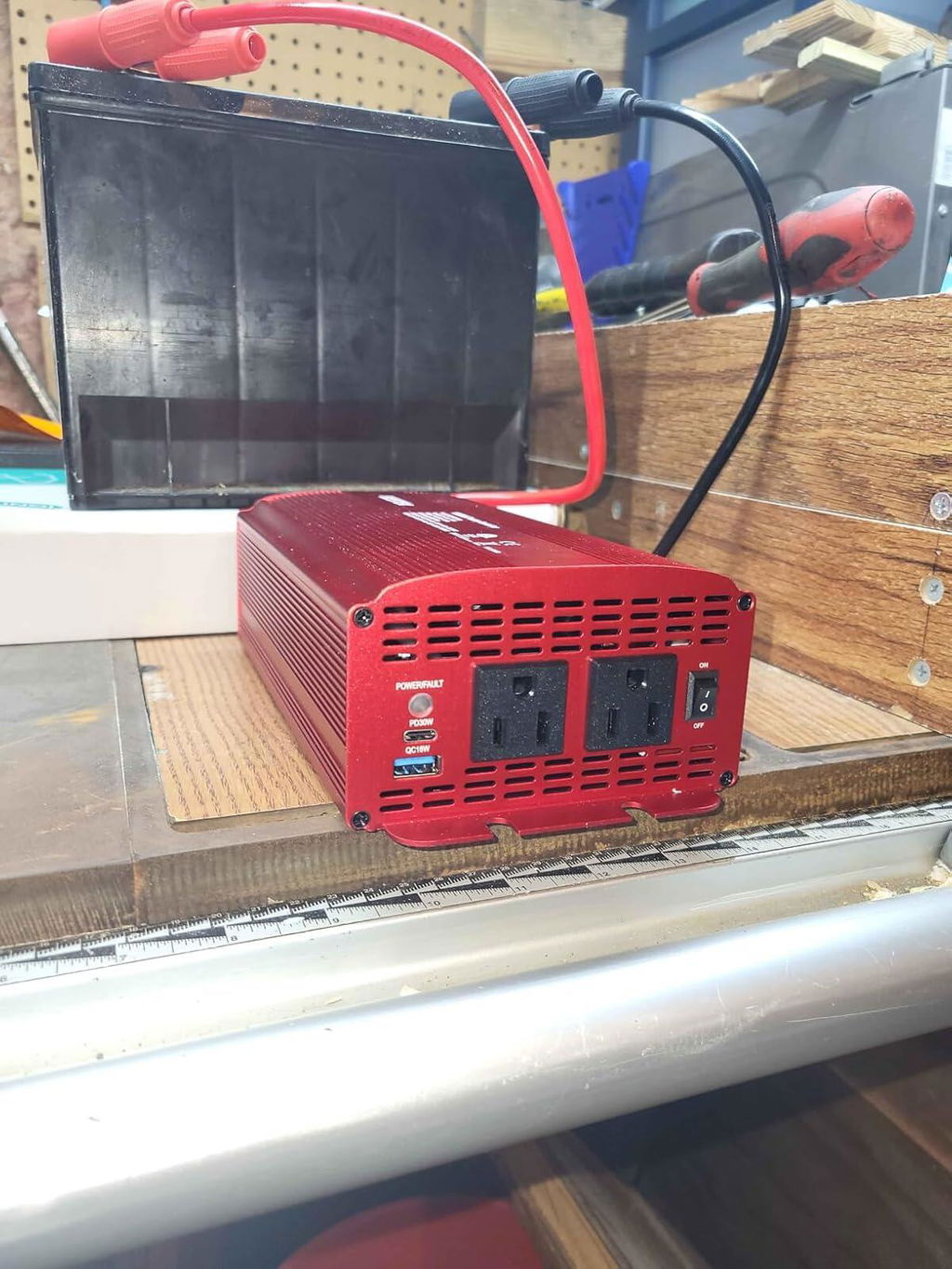
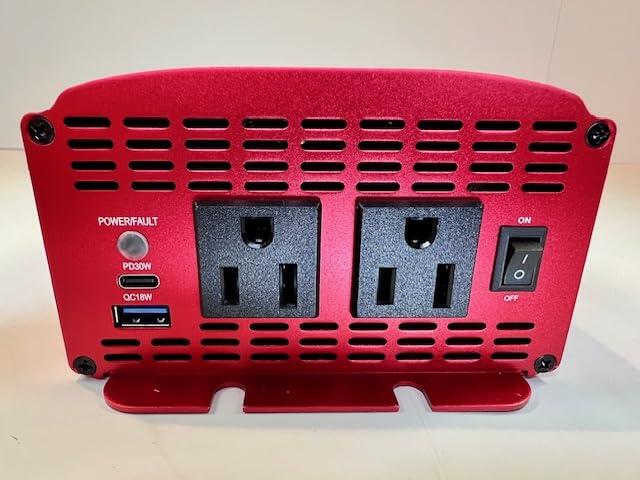
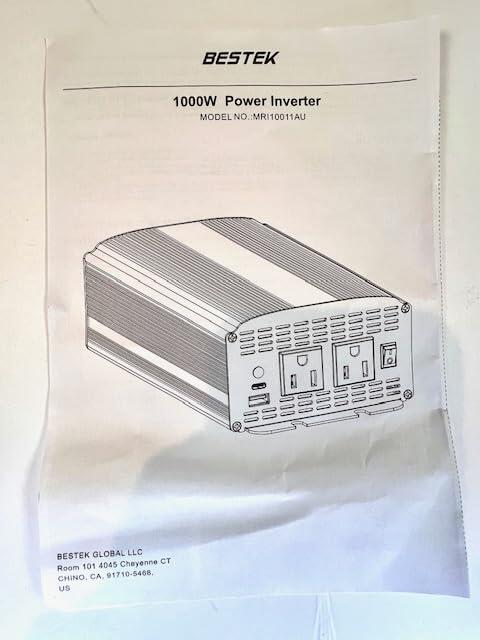
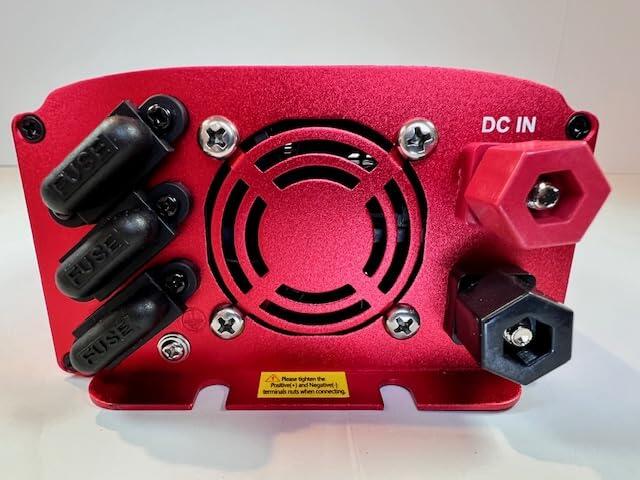
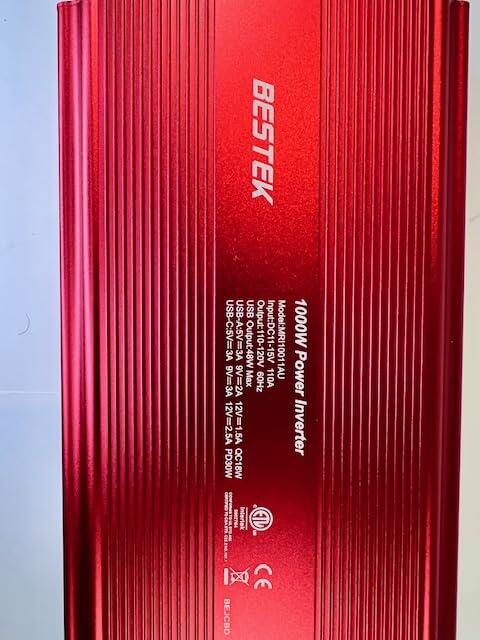
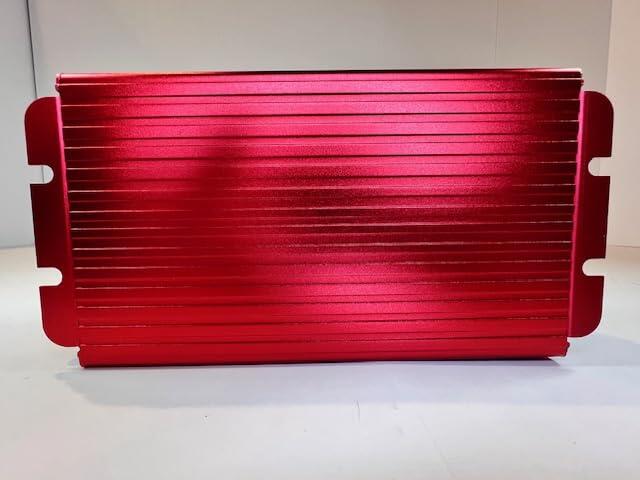
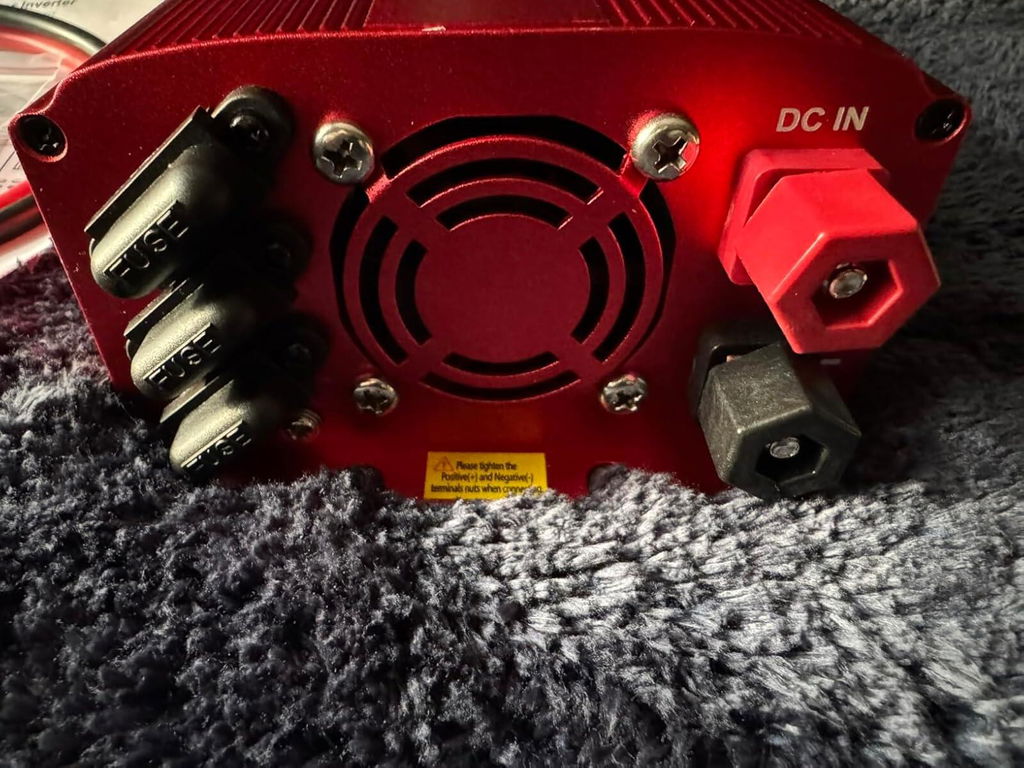
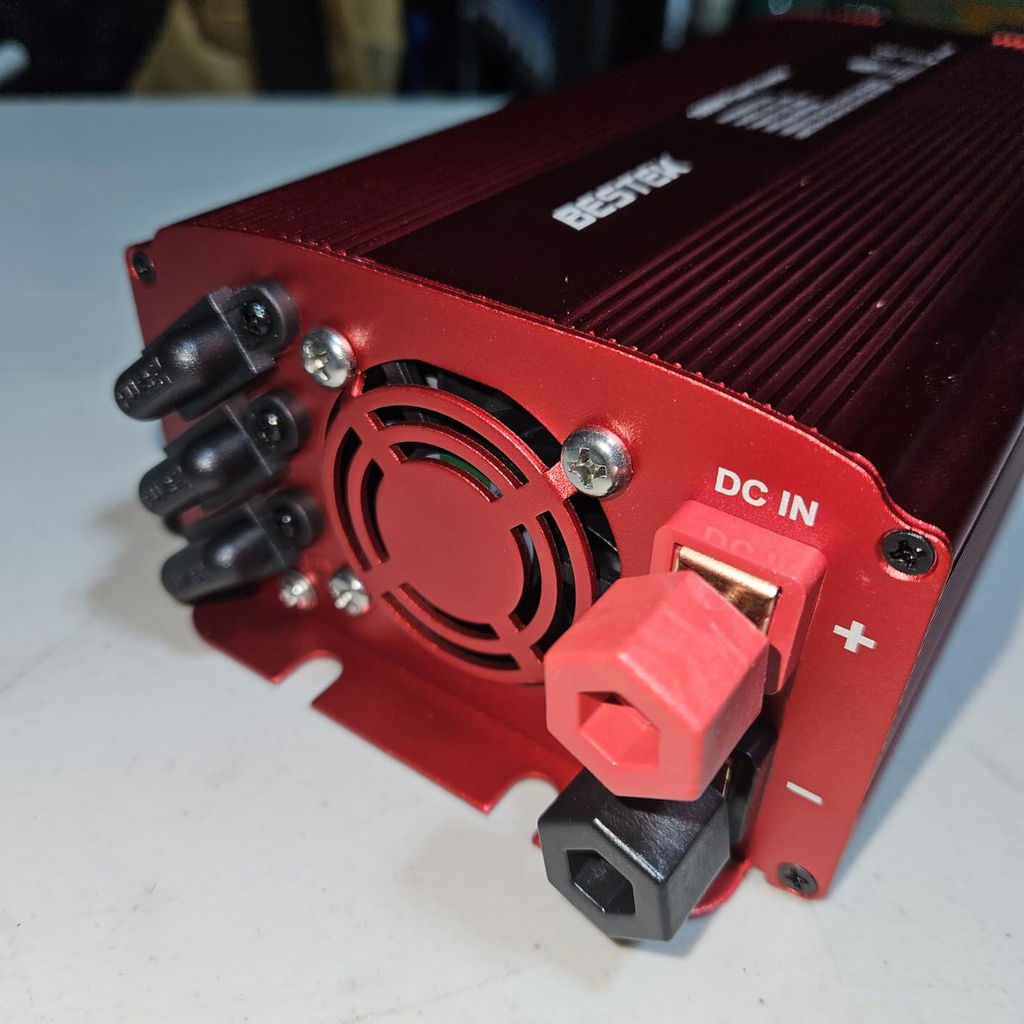
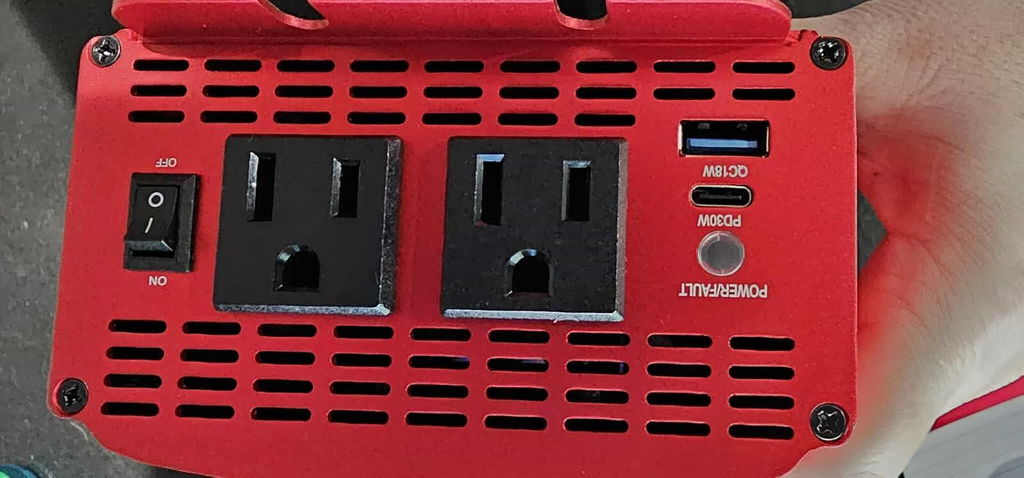
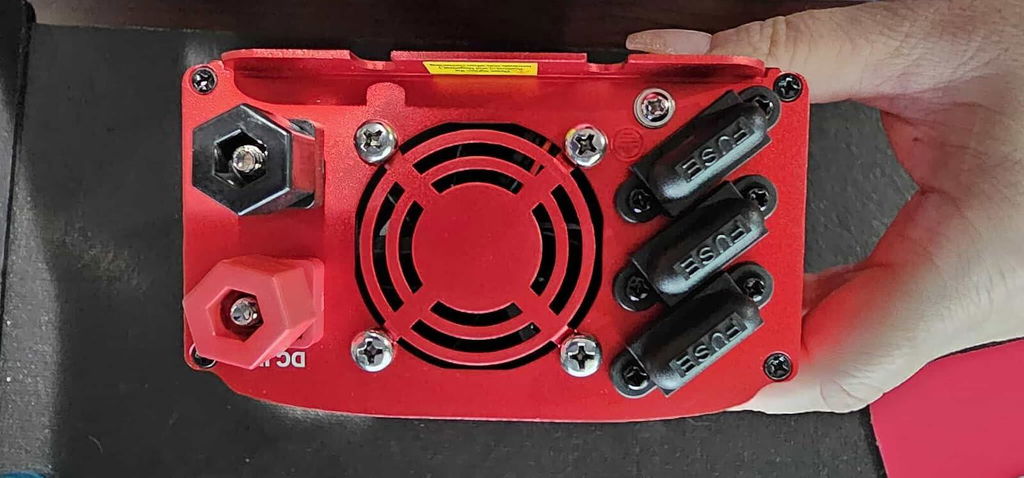
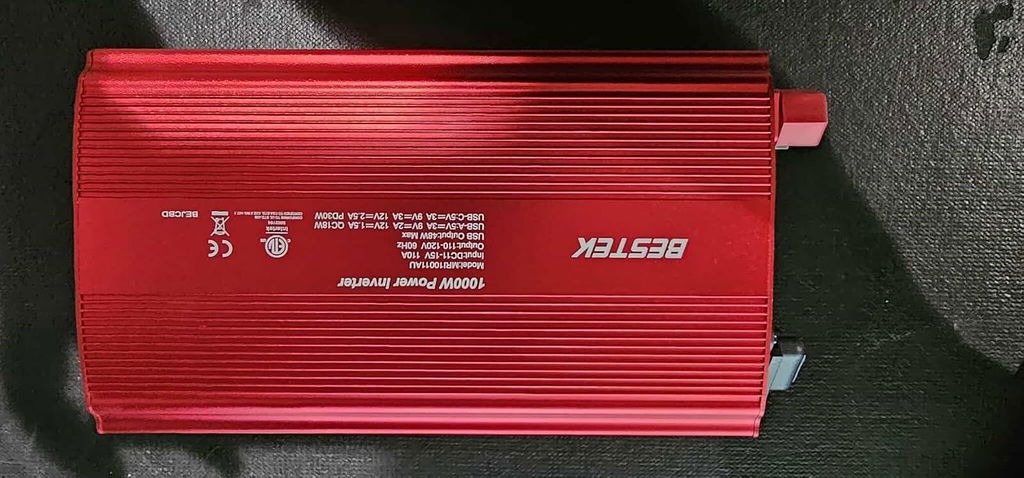
Explore the connections and everyday setup for this model. Check its label and specifications before connecting your devices.


Check the model, connections and operating limits before choosing.
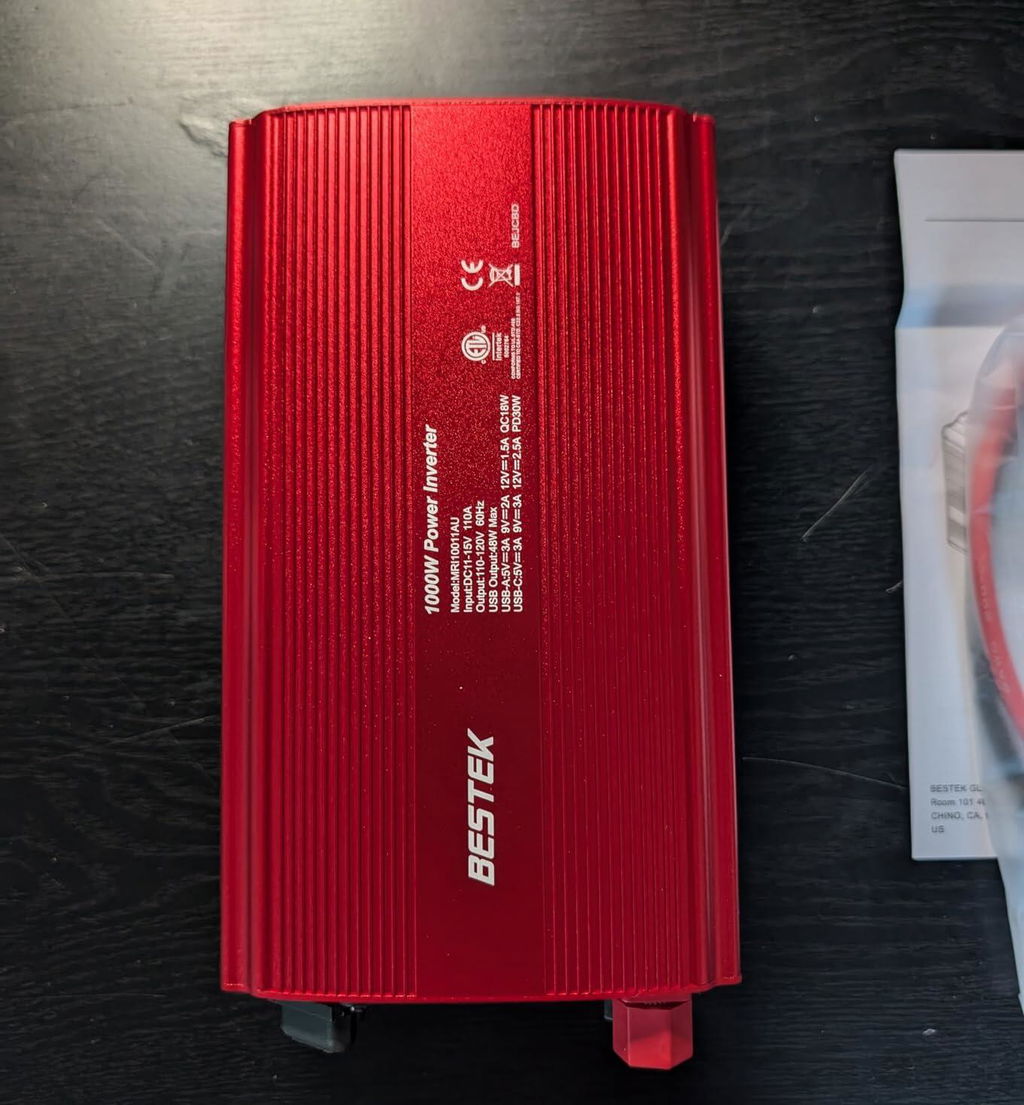
The images and specifications on this page apply to BESTEK 2-Outlet 1000W Car Power Inverter DC 12V to AC 110V with PD 30W USB C and QC 18W. Check the selected variant and model label before ordering.

Use the product-owned specifications to match the inverter, battery connection and intended equipment.

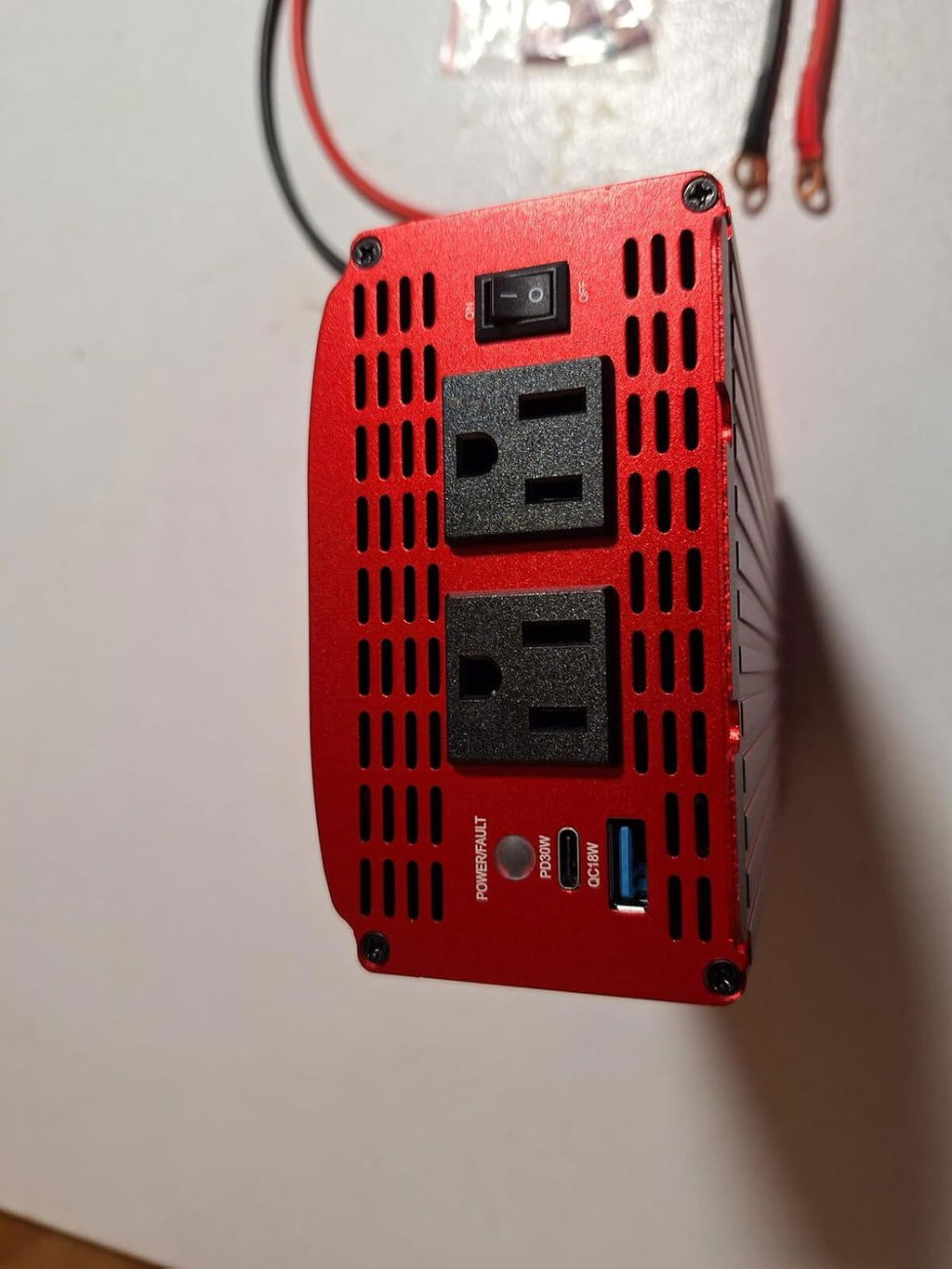
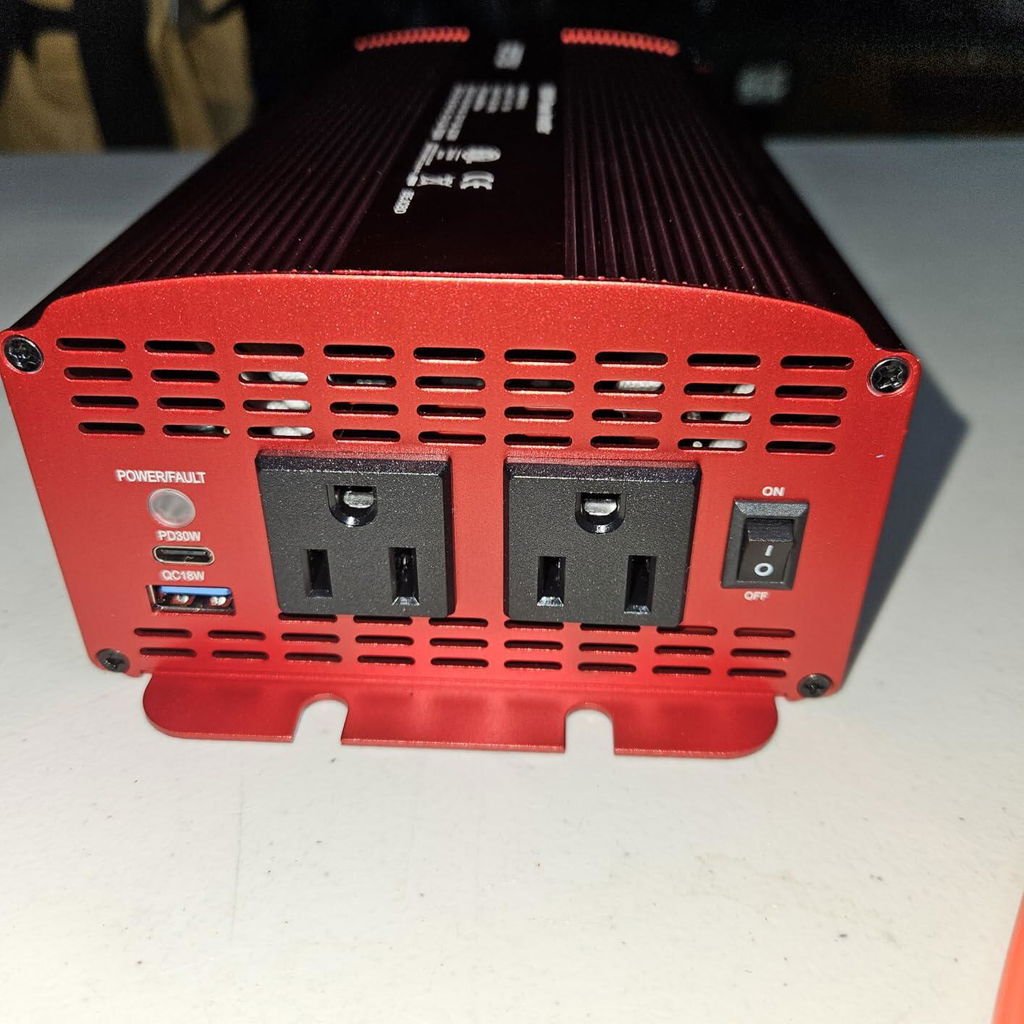
Review the panel, cable and remote-control layout supplied for this exact model.

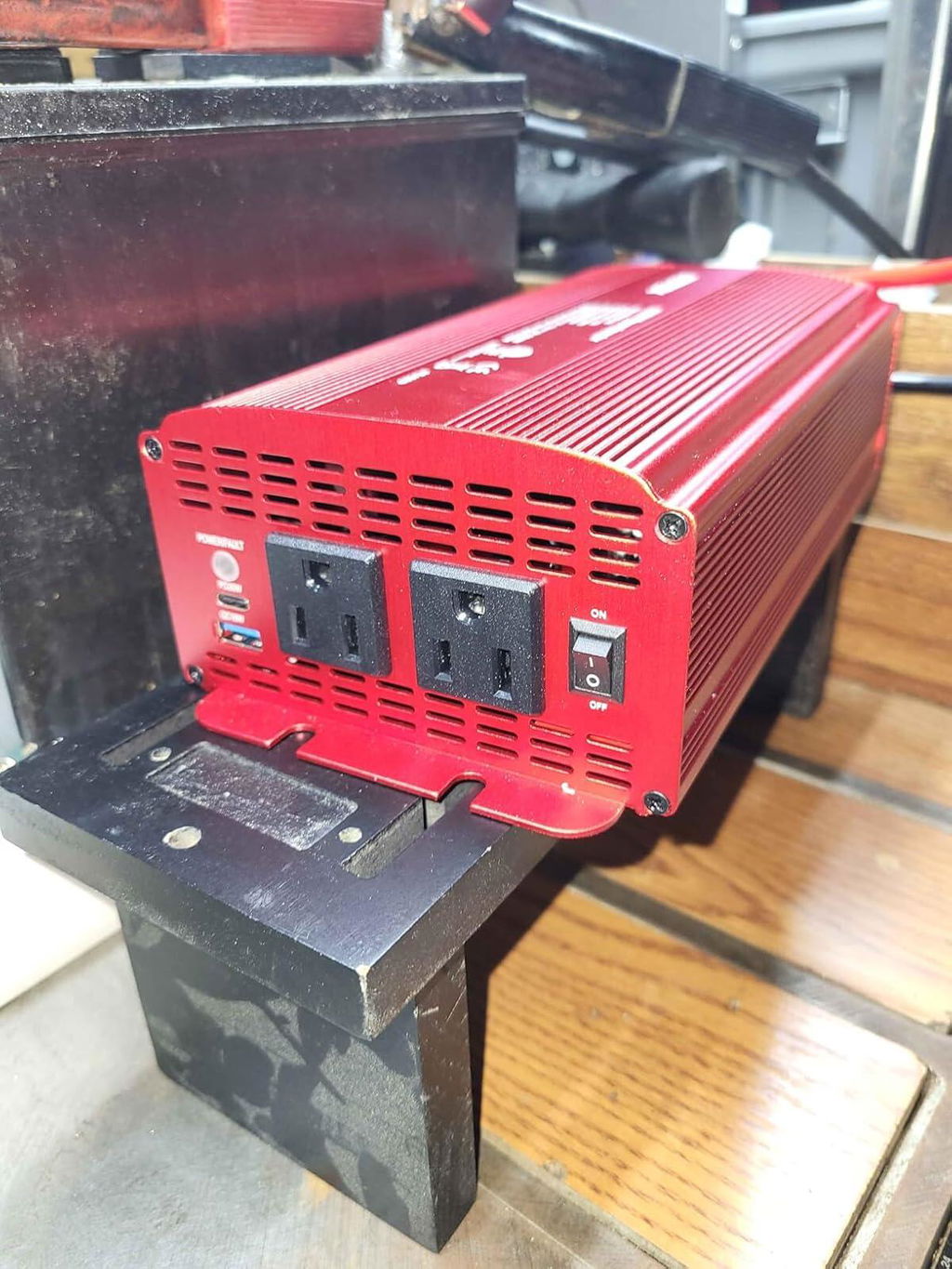
Keep the unit secure and ventilated, and follow the model instructions for wiring and clearances.
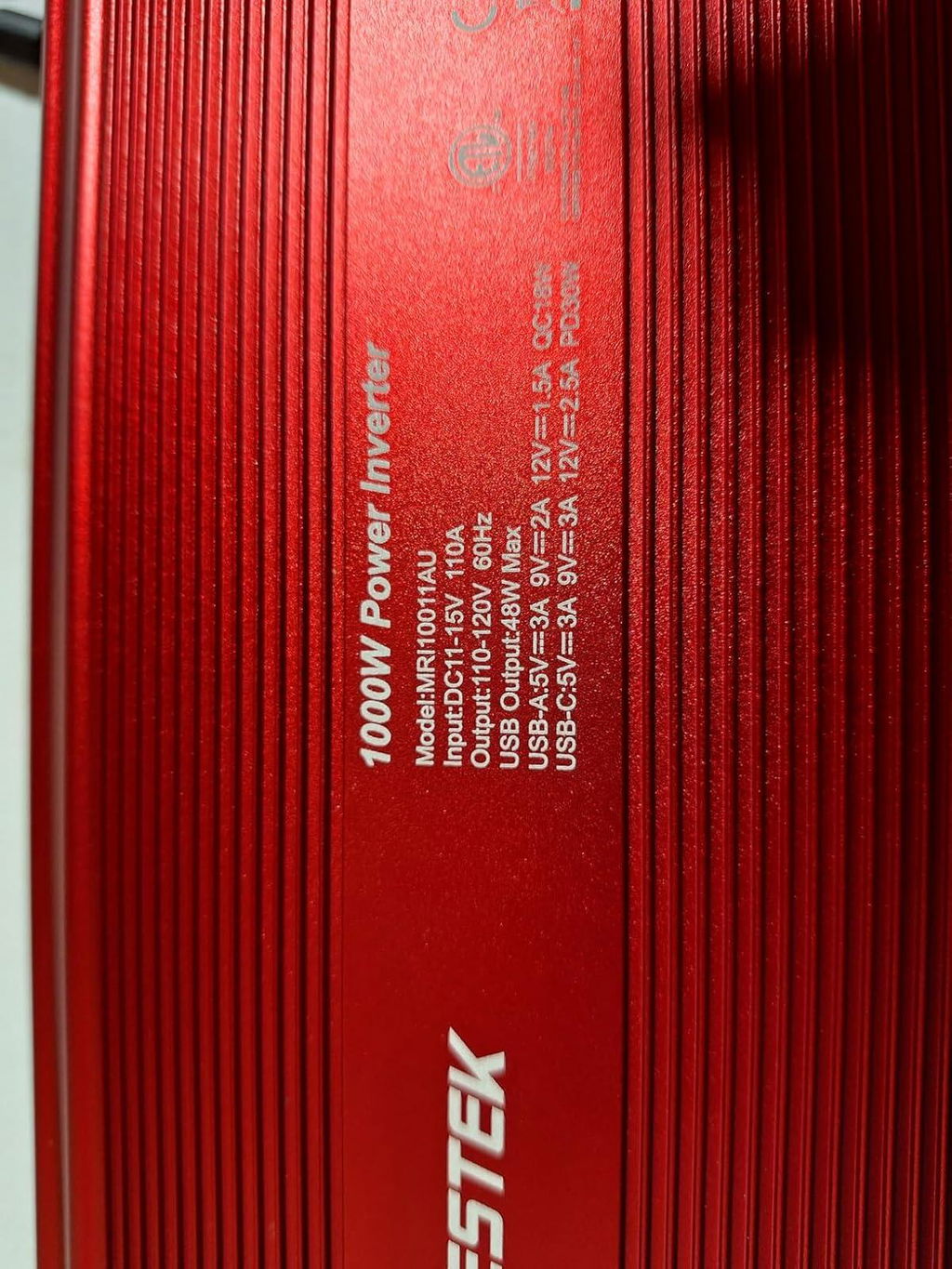
No. The MRI10011 is specified for a 12V DC battery and converts that supply to 110V AC. Do not connect it to a 24V battery system.
The 1000W figure is the continuous output rating; 2000W is the stated peak rating, not a continuous operating allowance. Check both running and startup requirements for your equipment, and follow the manual for battery wiring and connection.
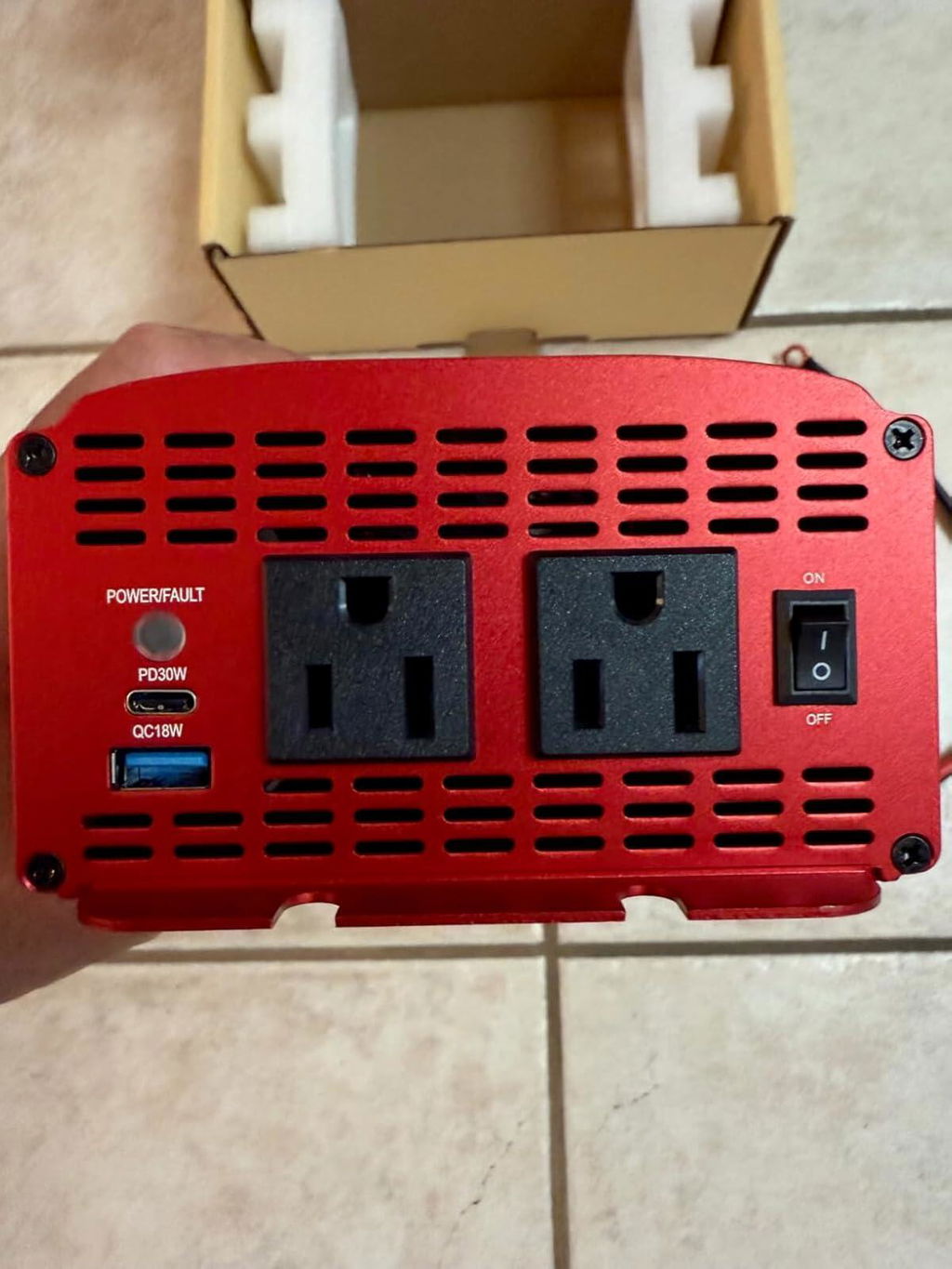
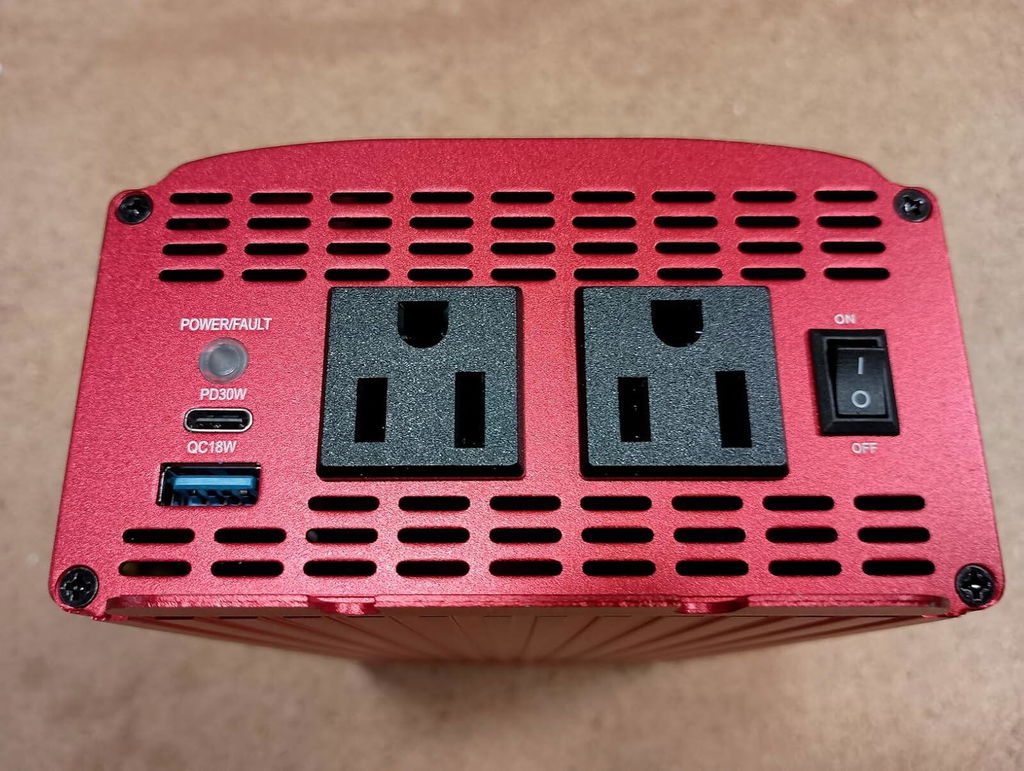
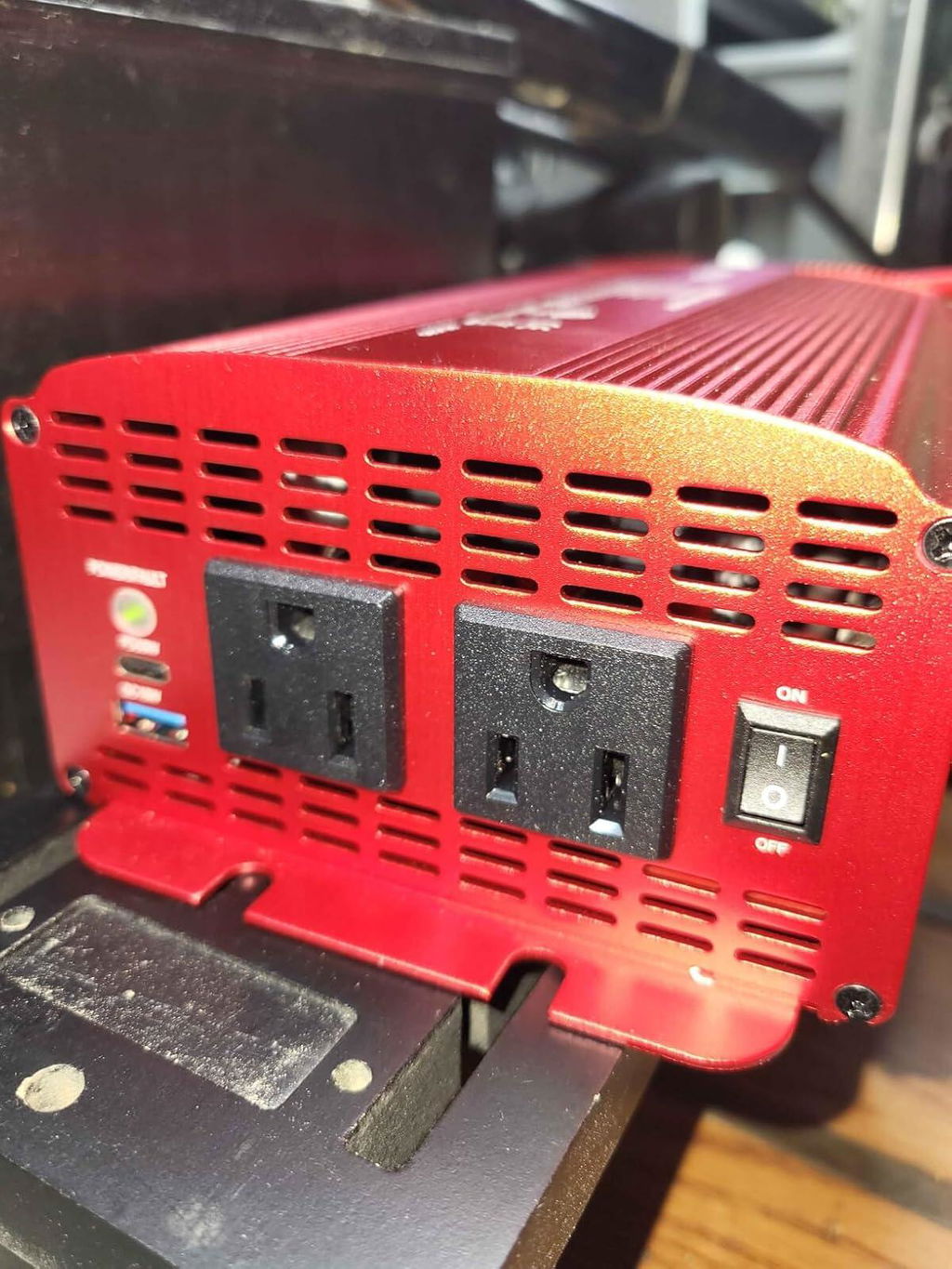
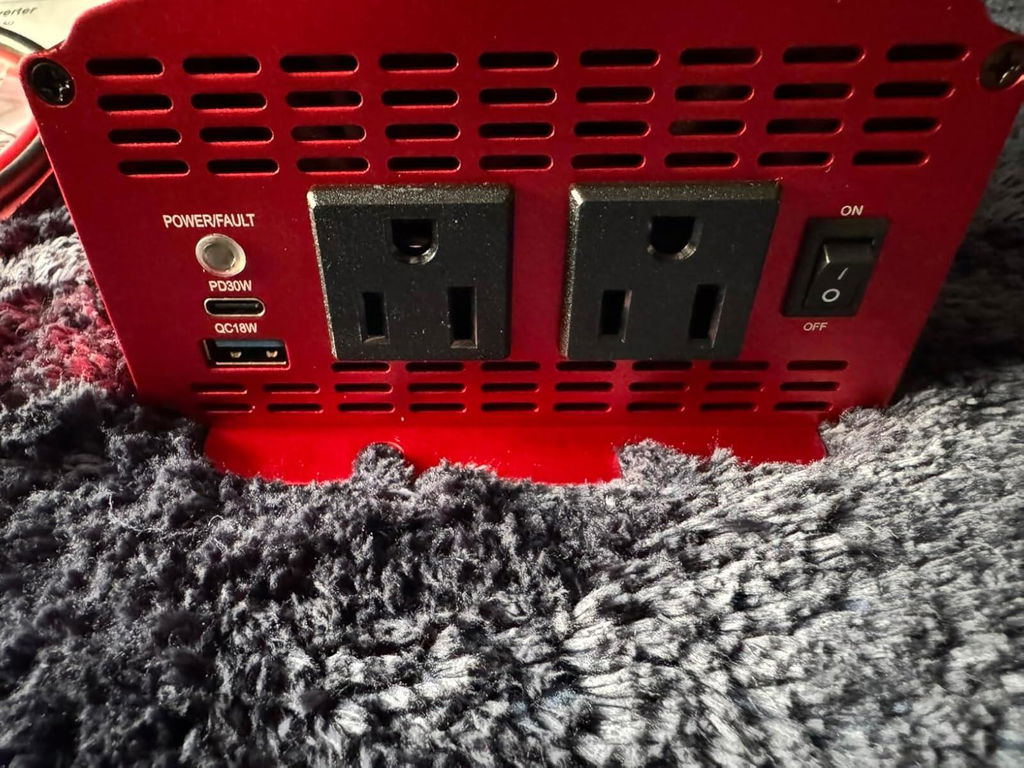
It has two AC outlets, one USB-C PD port rated up to 30W and one QC port rated up to 18W. Actual USB charging speed depends on a compatible device and cable.
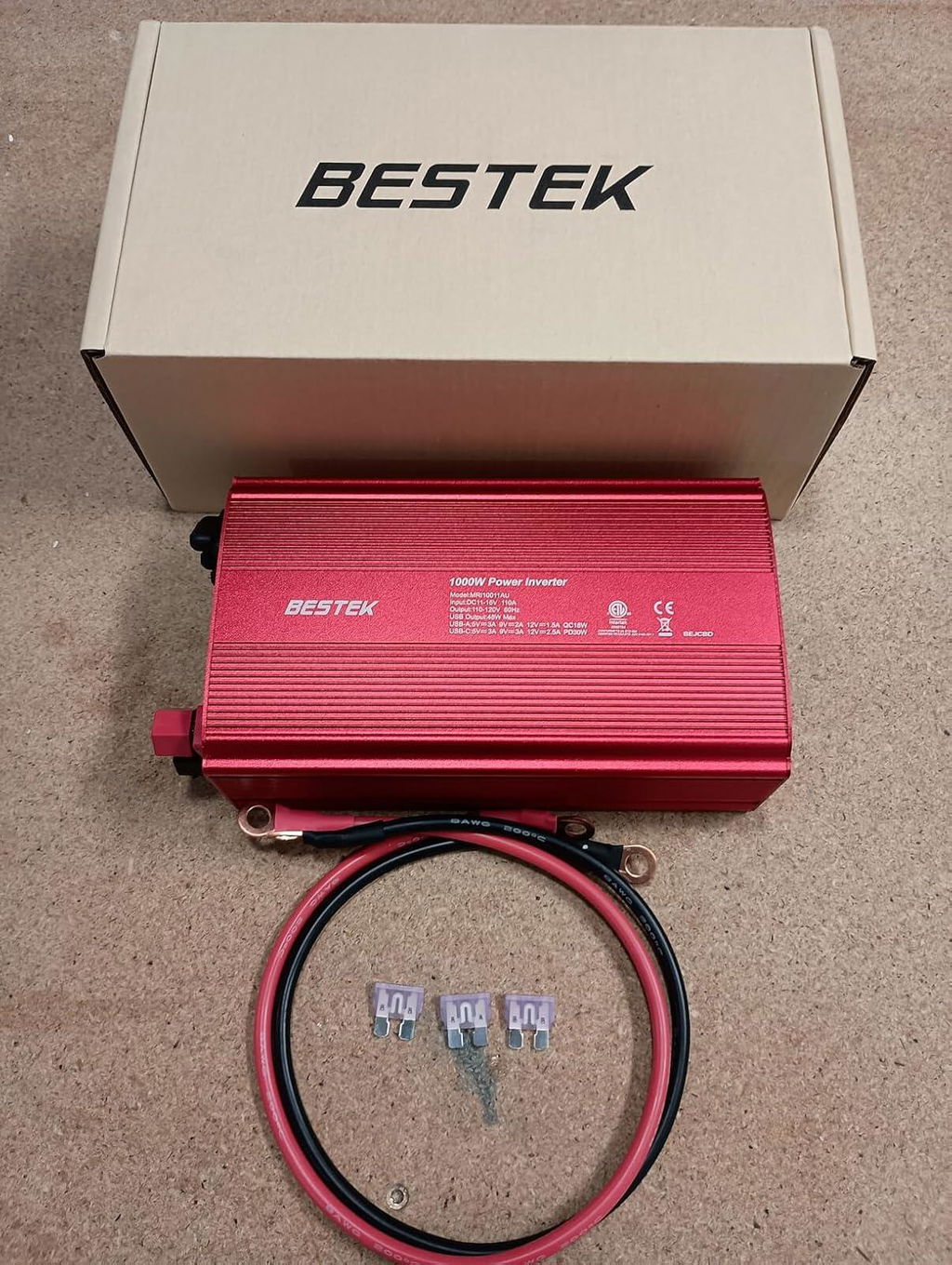
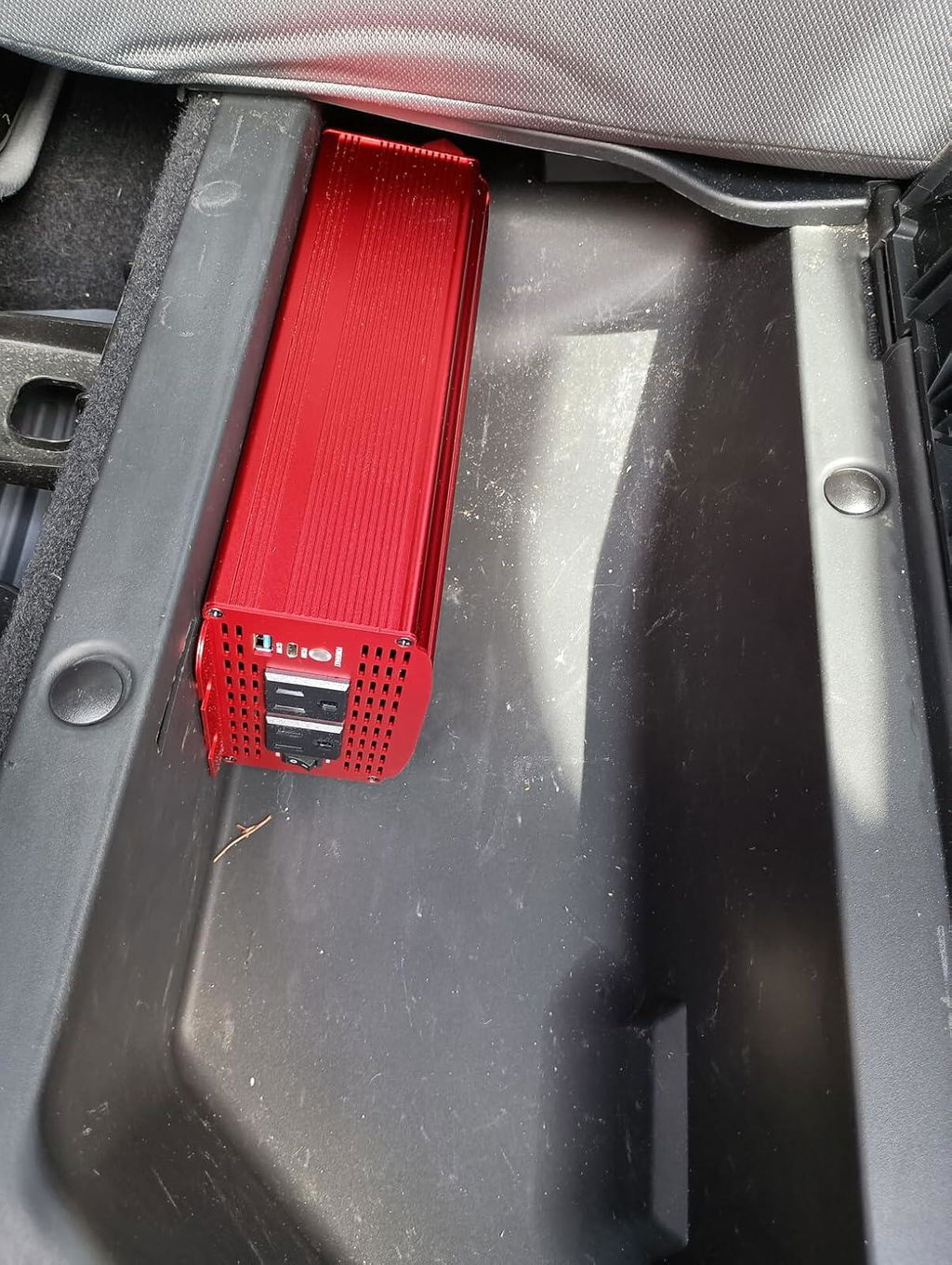
Not sure why orher reviews mention cigarette lighter connections because mine did not come with any. Ir WOULD be a nice addition. The wires provided worked fine with my side posts. Also not sure why others had noise level problems. Mine, while not silent, is a LOT quieter than running a standalone generator. I like the size; it is easily stowed under the back seat of mu p/u truck. Overall, this is a great addition to my safety/survival rosd kits.
This is a good value for a well-built, high-quality 1000W power inverter.This Bestek 1000-watt inverter is exactly what we were looking for to power our freezer or refrigerator in case we lose electricity, as we often do living in the desert. We will also use the inverter to power our TV and small appliances while traveling in our RV to remote campgrounds.Pro:- Well designed and well built, long lifespan with proper use.- Good quality; fit and finish is good.- Good power source, provides plenty of power for our needs, works well.- Provides fast power via USB ports to our devices.- Has protection features built in (this is important for us).- Has intelligent cooling fans built in for a long lifespan.- The included user's manual is easy to understand- Easy to set up and easy to use.- Is compact and portable.- The small size makes it easy to store when not in use.- Good quality cables and extra fuses are included.- The noise level is present but not unbearable.Cons:- The cables are a bit short; we will replace them with longer ones.Overall, this Bestek 1000-watt inverter is a good value for the money. The inverter provides plenty of power for our needs and is of good quality.
How was the item? ★★★★★What should other customers know?The BESTEK 1000W inverter (30W PD USB-C model) arrived in a padded box with the unit, 3 ft battery clamps, 2 ft cigarette lighter cable, and spare fuses. Brick-red aluminum shell with dual cooling fans feels pro-grade—2.6 lbs, vented sides stay warm (not hot) under load.Ports & power2x AC outlets (tested 850W continuous on space heater—no shutdown).1x 30W USB-C PD (charges MacBook Air 0–60% in 45 min).2x 18W USB-A (fast-charges iPhone 15 Pro).Digital display cycles volts, watts, fan status.Real-world IT useRoad trips: Powered 17-inch work laptop + hotspot for 4-hour drives (fans audible but not loud).Tailgates: Kept drones, lights, and cooler cycling all afternoon.Battery safety (critical!)Never run off car battery while engine off—drained my CX-5 from 12.6V to 11.8V in 90 min at 300W.Pair with a dedicated 12V deep-cycle or portable power station (I use a $120 Amazon 100Ah).Built-in 40A fuse + low-voltage alarm (10.5V) saved me once.Durability (2 months in)Survived Indiana winter trunk temps (-10 °F to 90 °F).Clamps grip tight; cigarette cable for light loads (<150W).Fans auto-activate above 200W—quiet at idle.TipsMount upright for airflow.Use 4-gauge cables for >500W runs.PD port prioritizes phones over laptops.Who should buy?Remote IT workers needing AC in the field.Campers/tailgaters wanting more than 300W.Who should skip?Ultralight travelers (weighs 2.6 lbs).Anyone ignoring battery rules.ValueVine freebie = trunk essential. At $75 retail, beats Giandel and Krieger in ports + PD. Five stars: power anywhere, if you respect the battery.
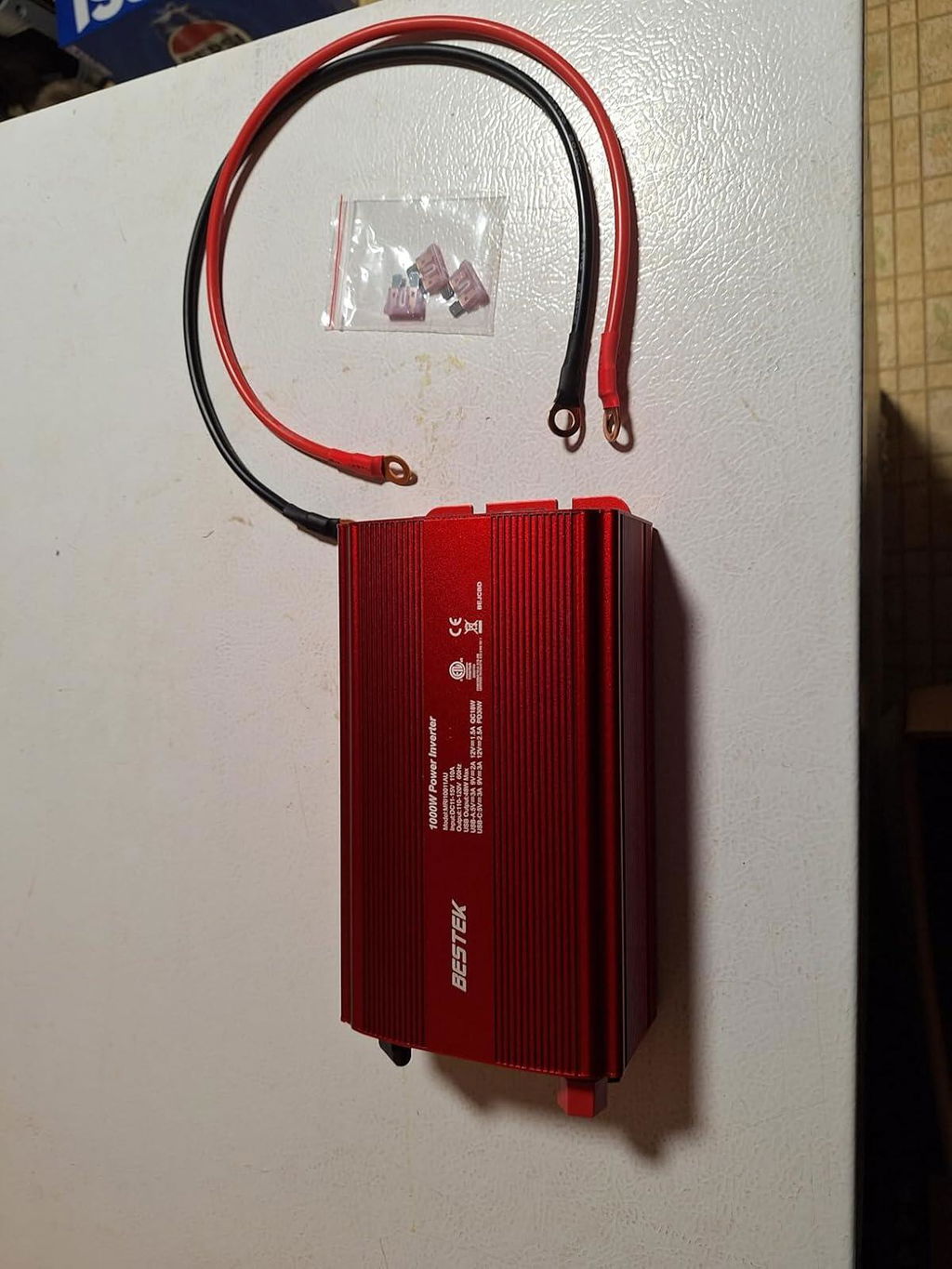
This is compact yet durable. The aluminum finish is great. The sound did not bother me at all, even when I had the unit nearly fully loaded. All of the USB ports worked as advertised. Does also come with 3 spare fuses AND some very nice quality terminal wires with nice silicone outer sheathing. This unit charge capability worked as described. Overall this is a great value that worked very well. I had no issues with extensive testing at room temperature.
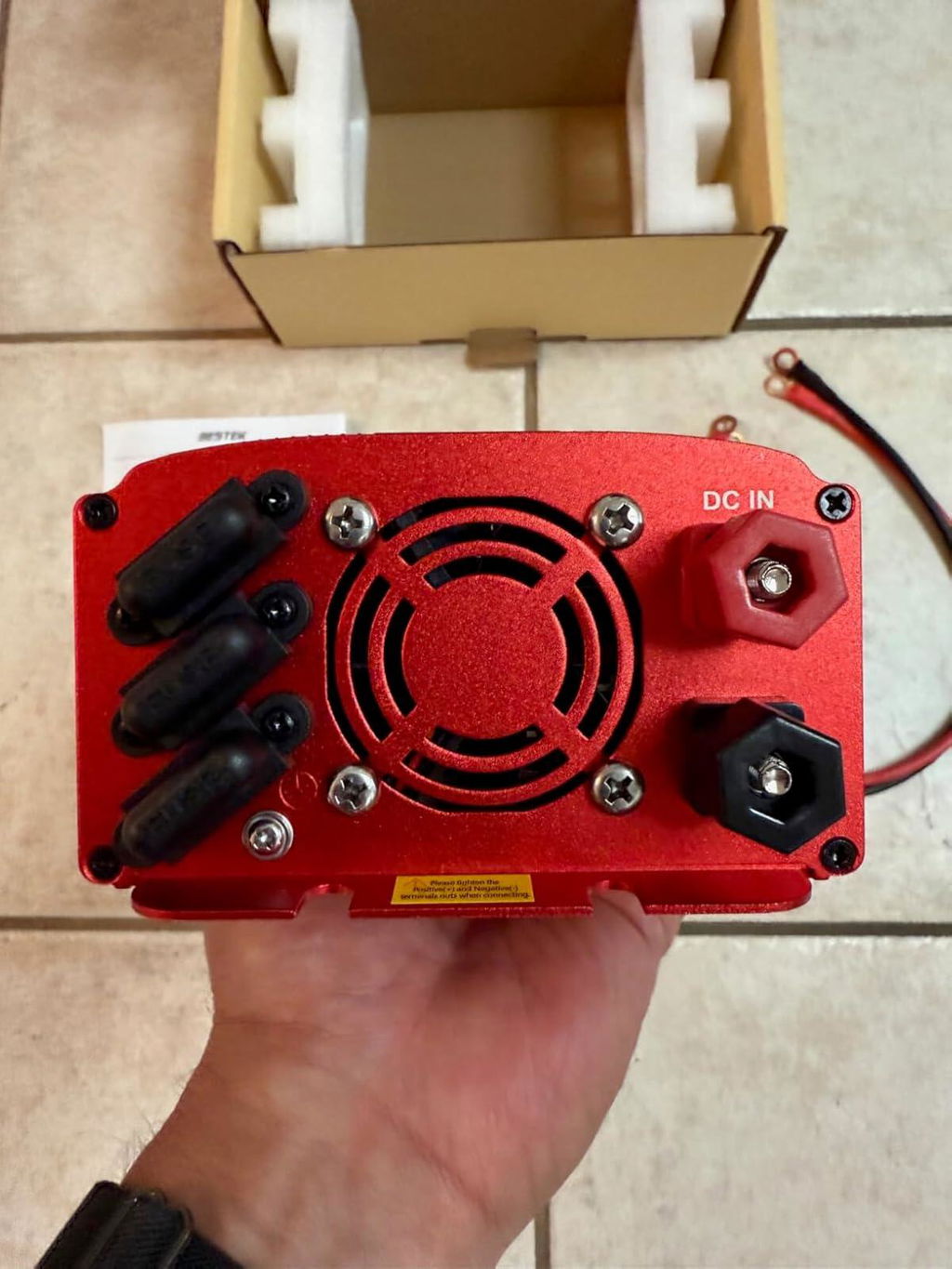
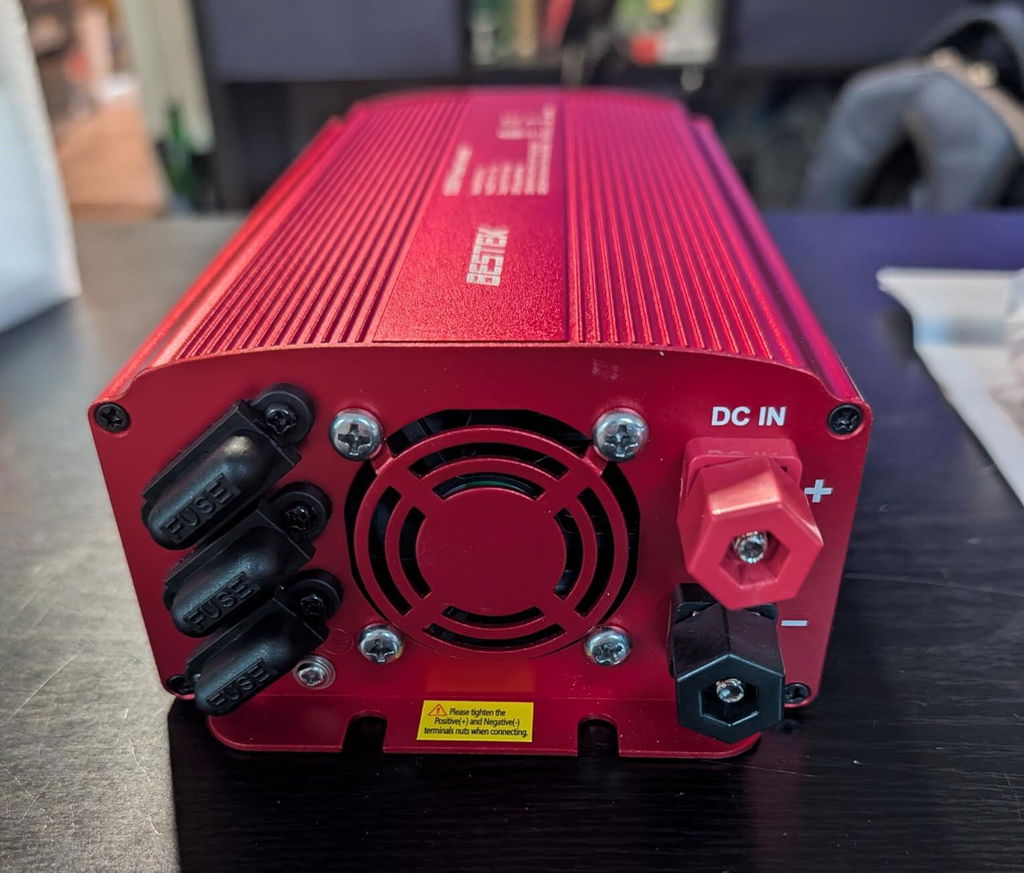
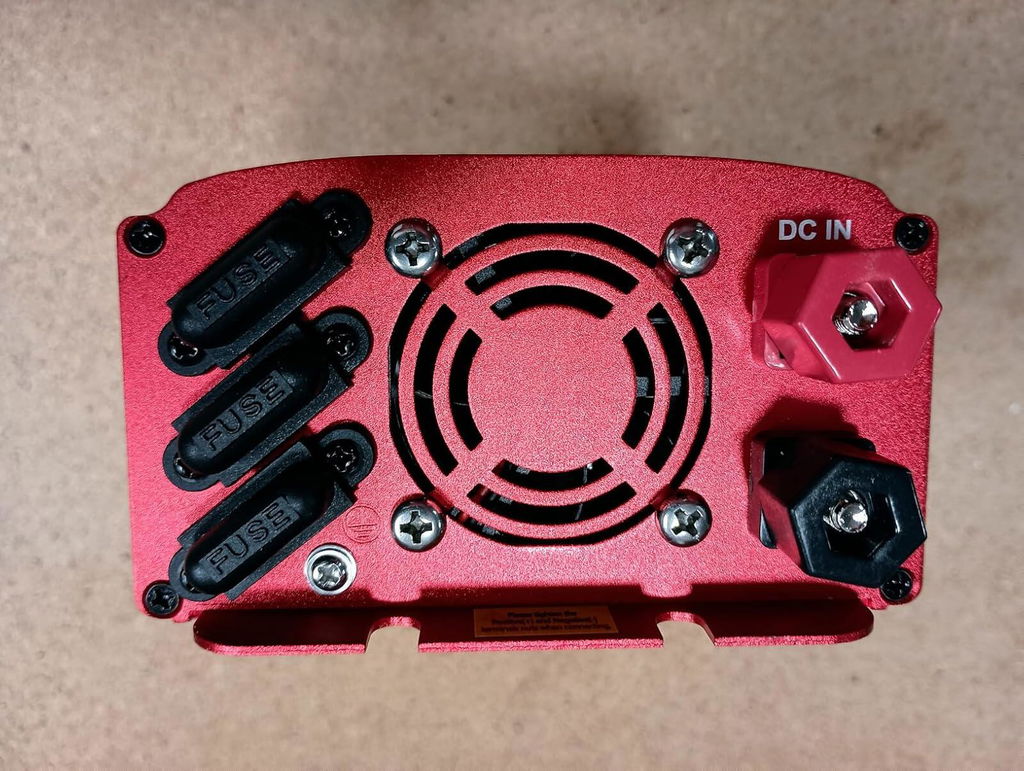
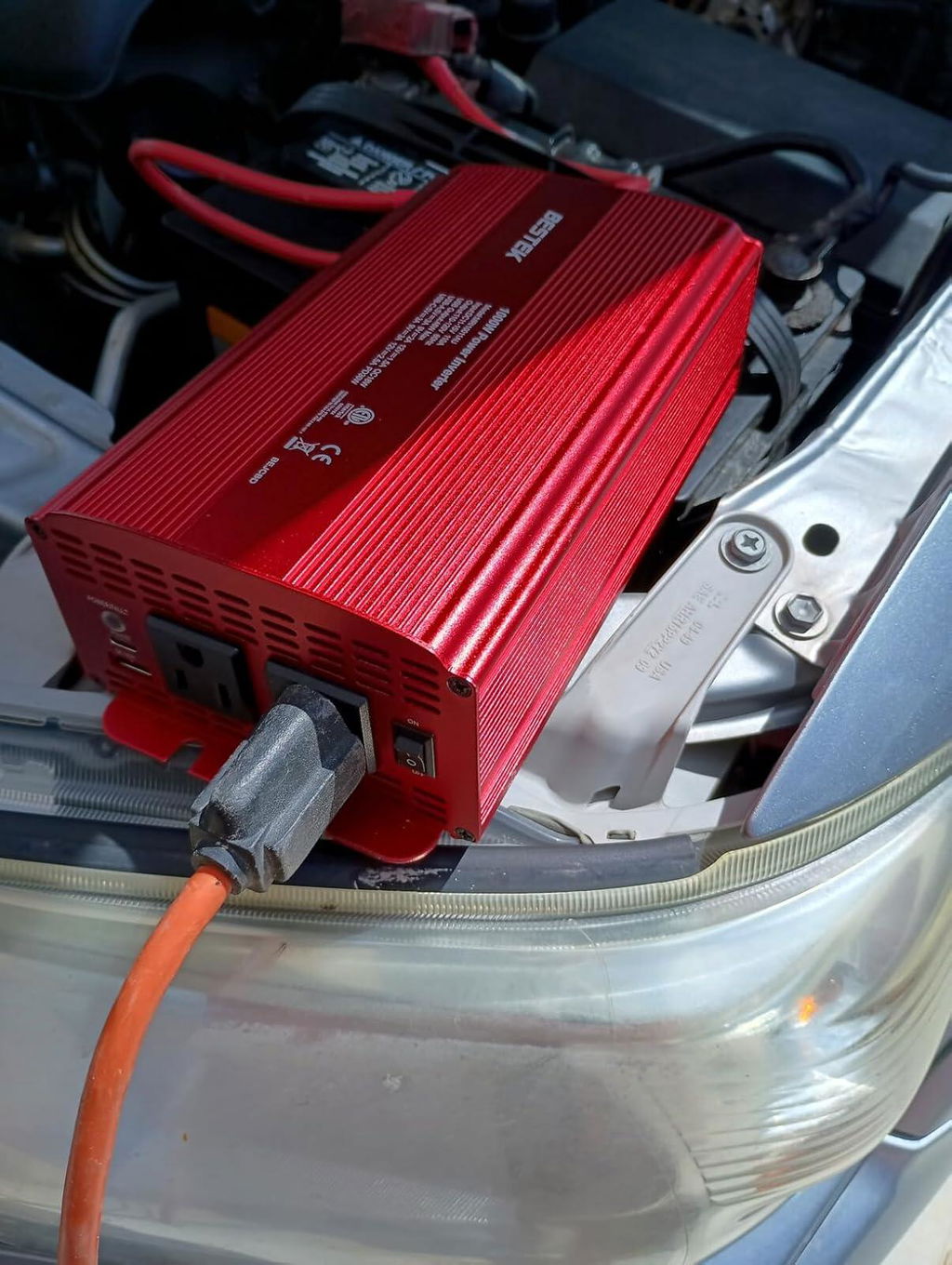
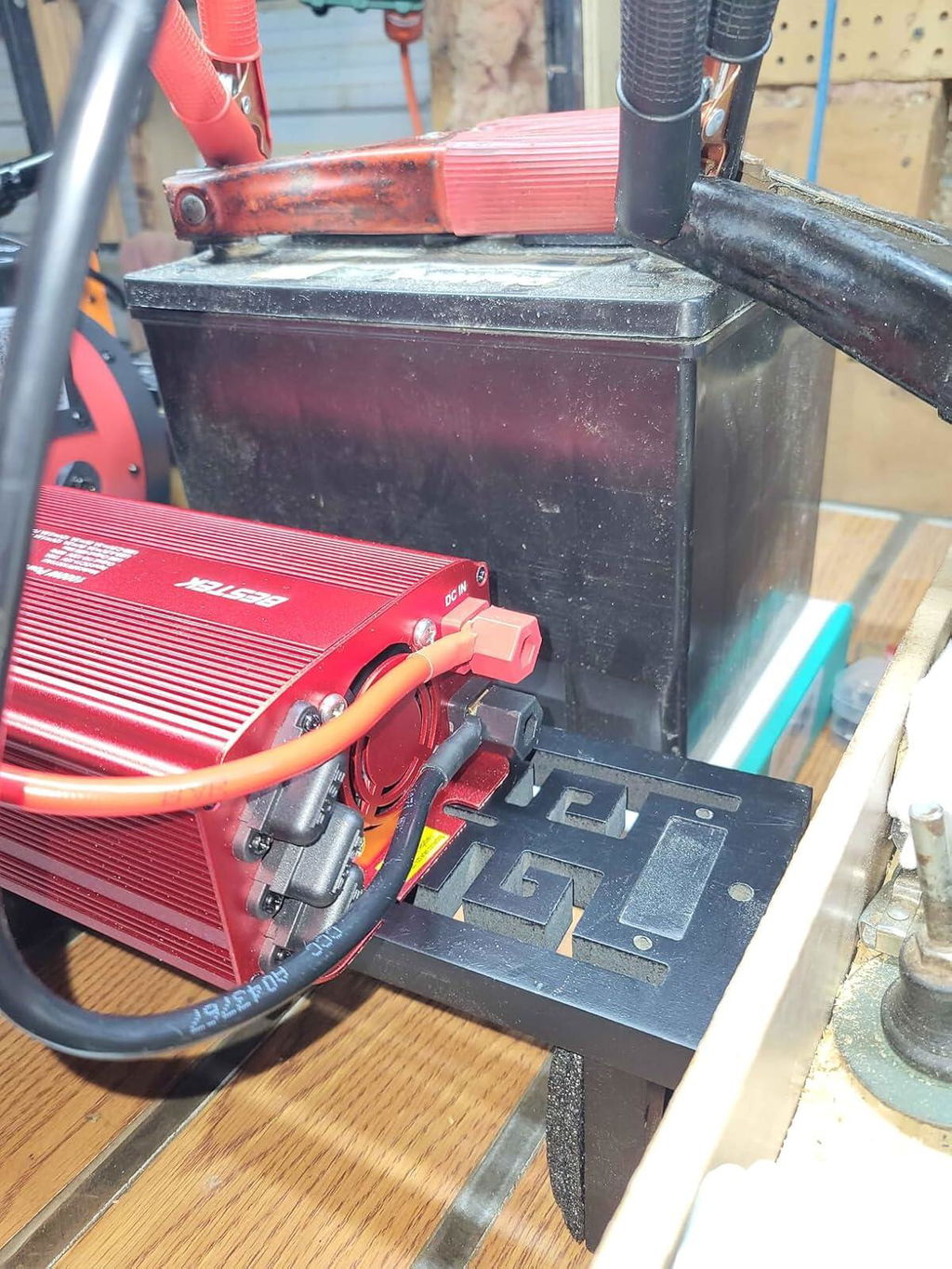
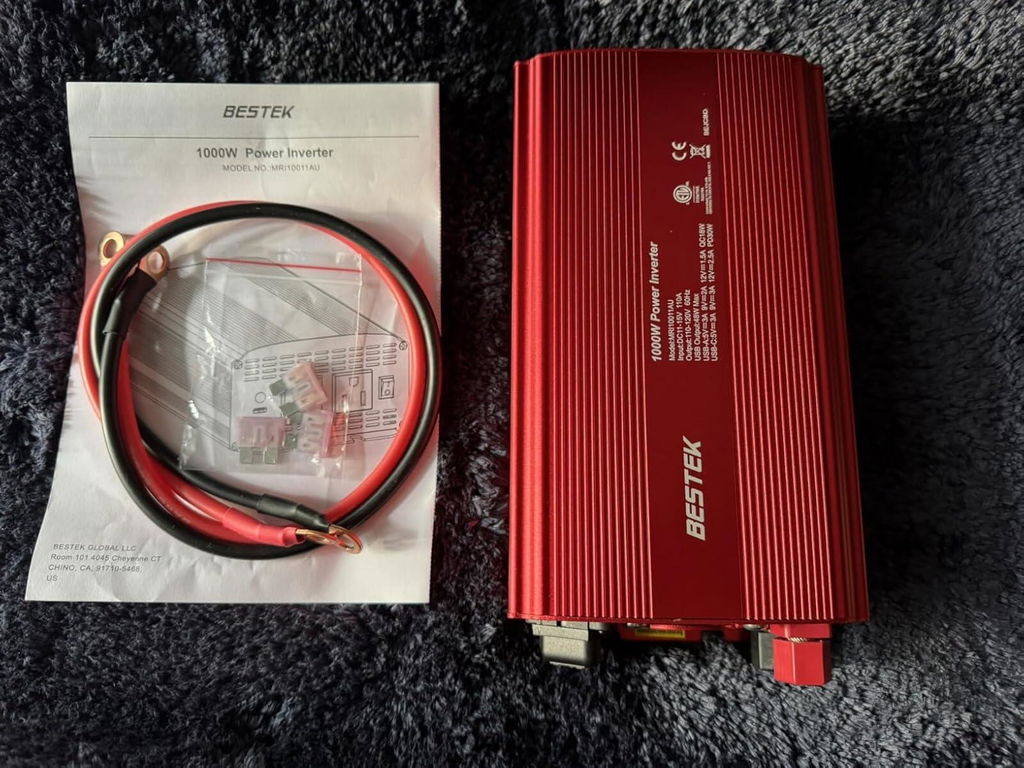
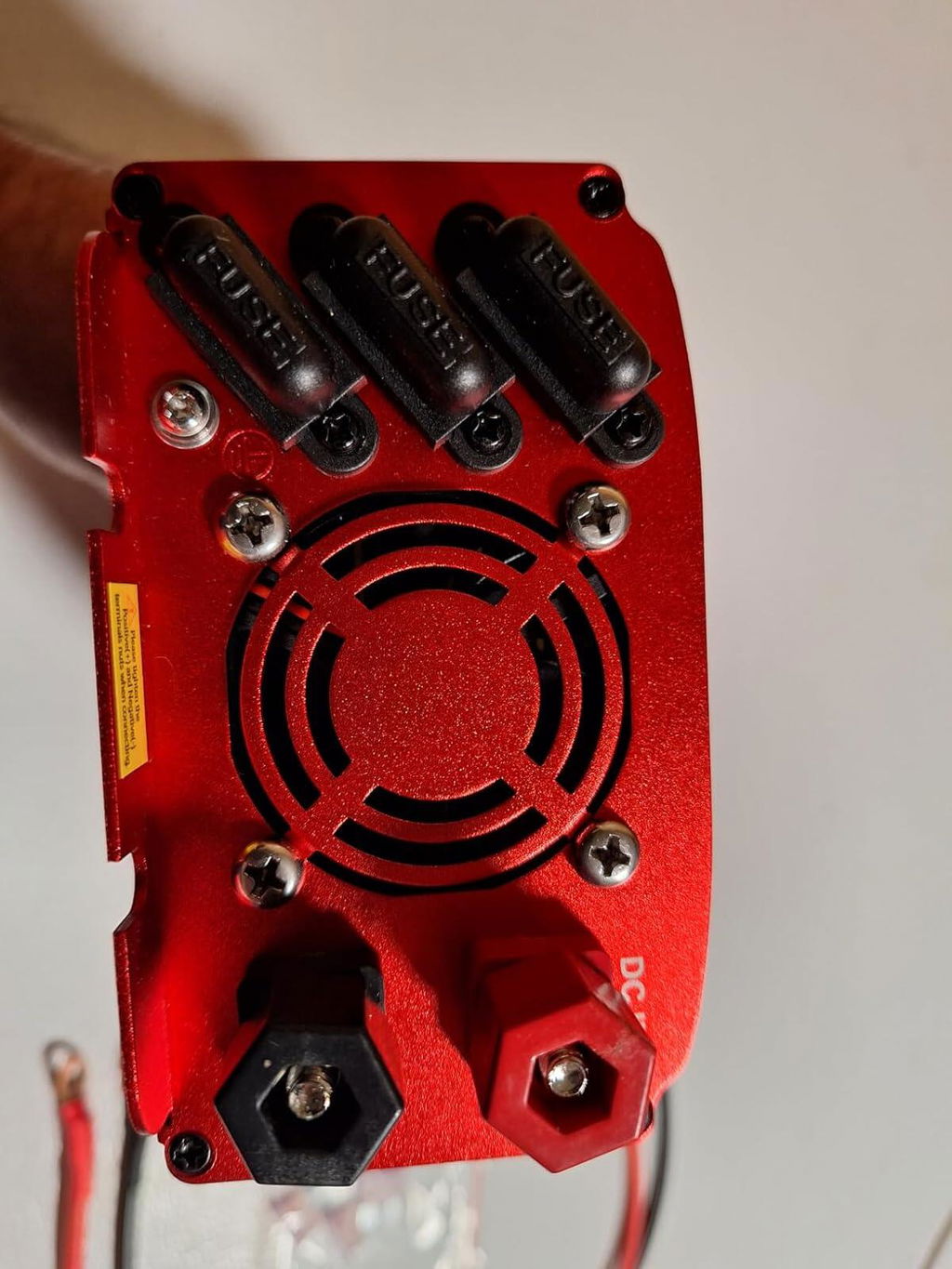
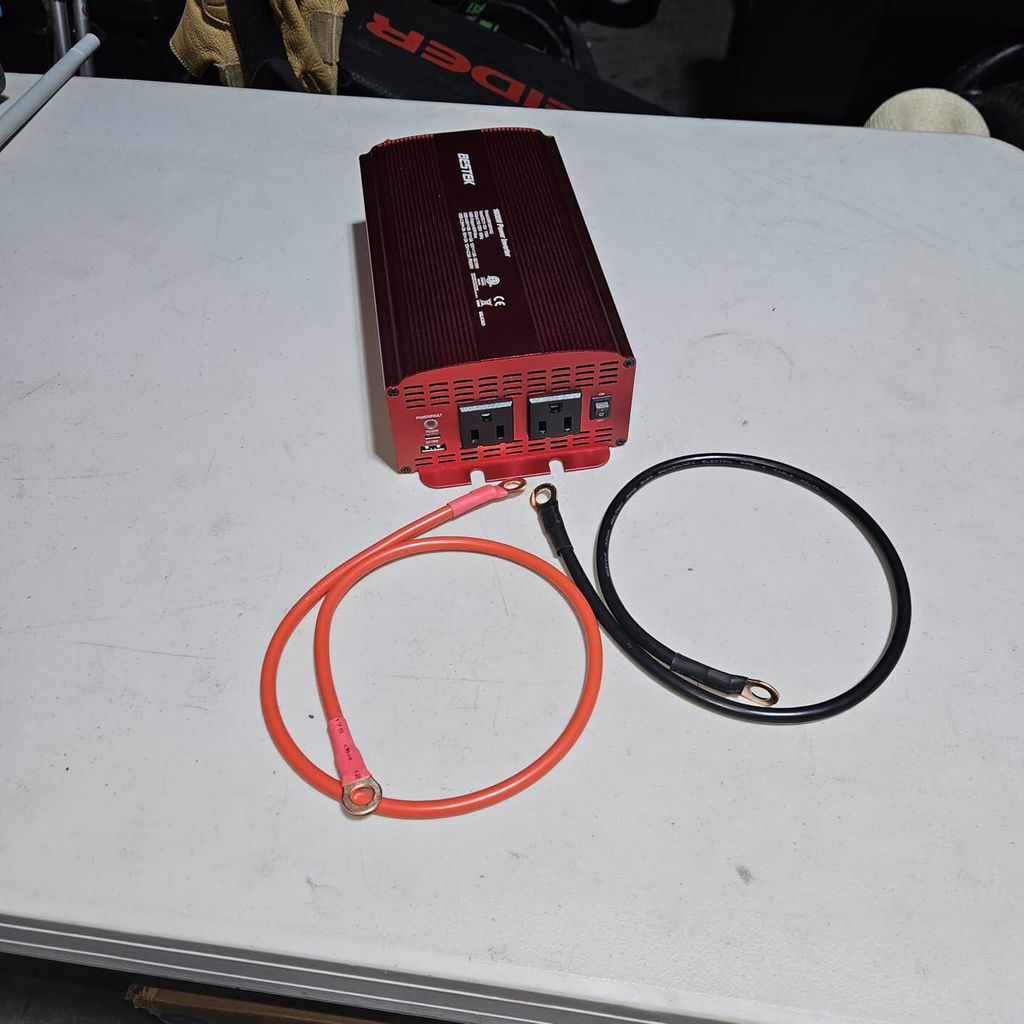
The BESTEK 1000W Power Inverter is impressive with its red anodized aluminum case. That’s the first thing I noticed as I opened the box. The next thing that caught my eye was the package of cables included to connect the inverter to a 12-volt power source. The two 18-inch cables have 5/16-inch copper ring terminals and are very flexible, but the wire gauge seemed small. They are 8AWG which is marginal for the potential current, but the small size is mitigated by the 200-degree Celsius temperature rating and the short length. If you plan to mount the inverter using longer leads, a larger wire gauge is needed. The included specification sheet indicates it draws a maximum of 110A at 11-15VDC, but it’s also protected by three 50A fuses implying that the total maximum input wattage is limited to 750W (50A at 15VDC). It’s not clear to me why three fuses are part of the design, but three replacement 50A fuses are included in the box and all three fuse holders are populated. At the specified efficiency, the maximum output wattage is approximately 625W, significantly below the advertised 1000W output. A nice feature of this model inverter is that it also has USB-A (QC3.0) and USB-C (PD) outputs along with two 120VAC outlets. I tested the inverter by connecting directly to my truck’s battery. It powered my circular saw (13A max at 120VAC). It marginally handled the current surge typical of an AC motor. The saw kicked on, started to slow down, and then powered up to what sounded like its typical speed, but the motor was not loaded. My saw should be able to cut nominal-sized wood if I have a sharp blade and go slowly. I plan to mount it under the rear seat of my truck using 4AWG cables. Because the inverter is not environmentally sealed, it must be used in a dry and relatively clean environment. Another approach is to install a high amperage connector in the engine compartment and plug it in when needed. Of course, it could be powered from a bank of 12V automotive batteries that are charged by solar panels or other any other high amperage 12VDC source. A few years ago, I used a similar style inverter connected to my pickup truck to intermittently power a refrigerator and a freezer during a 4-day power outage following a typhoon when I lived in Fiji. It was a lifesaver. This will be a great emergency preparedness feature when I finish the installation in my truck. It's priced well, looks well-built, and has additional features, such as USB outputs. It's always good to be prepared!!
The media could not be loaded.
I’ve been using the BESTEK 1000W inverter in my truck for camping trips and as a backup during a recent power outage. The unit performs well easily runs my small TV, laptop, small heater and even a mini fridge without tripping. The PD USB C port charges my Laptop faster than expected, and the QC port topped up my phone quickly.Build quality feels solid thanks to the aluminum housing, and the safety shutoff kicked in once when I accidentally overloaded it with a toaster, which gave me confidence in the protection features.My only critique is the cooling fans. They work effectively and keep the unit cool, but when under heavy load they’re louder than I’d like, especially inside the vehicle at night. Size is compact enough to store under a seat, and the included cables are decent but a bit short for flexible setups.Overall, a dependable inverter with strong performance and useful charging options—just be aware of the fan noise if you plan to use it in quiet environments.
I picked up this BESTEK 1000W inverter to keep in my truck for road trips, camping, and backup power at home. It has not disappointed me once. The build and design feels solid, the cooling fan kicks in when it needs to, and it handles everything I have thrown at it so far (within reason).I have used it to run tools, charge up laptops, and keep small appliances going when the power was out. The two outlets are handy and the USB port is quick and reliable for phones and tablets. It does draw power from the battery, so you need to make sure your vehicle is running or your battery is strong, but that is common sense with any inverter. Personally, I keep my truck running just to be sure it doesn't drain my engine battery.It runs quiet, never overheats, and has given me steady performance without hiccups. For the price, it is an easy buy. I trust it enough to keep it as part of my emergency kit and I would not hesitate to buy another one if needed.Technical Information: Total rated output is 1000 Watts with approximately 83% efficiency.At full load (1000 Watts @ 83% efficiency), the inverter will draw about 100 amps from the vehicle battery. WIthout running the vehicle to charge the battery, you are looking theoretical time of 36 minutes of runtime before the battery is depleted, but realistically, real-world expectations are closer to 15-20 minutes before the inverter blows a fuse or your vehicle battery is served well-done. I strongly suggest using a deep-cycle / marine / RV battery when using these inverters regularly unless it's for an emergency where lower wattage use is expected. For example, a typical AC-powered circular saw draws 10-15A at 120VAC = 1,200-1,800 watts. Additionally, you must calculate the initial startup surge, which can equal 2-3x the running power of the saw (momentary 2,400 - 5,000 watts). As you can see, it's doubtful that you could use this inverter for a circular saw while building your dream cabin deep in the woods. I inserted a handy chart below that may help you decide how you may want to use your new inverter.GOOD FIT ITEMS (Under 800 watts with low startup surge)Lamps with 60W LED bulbs (can run more lamps than you own (8-10 watts of power each).Dewalt Tool Battery Charger (18V/20V/24V - 50-100W)Laptops & chargers (30–100W each)Phones, tablets, USB hubs (5–30W)Small TVs (50–150W)Stereo/radio gear (50–200W)CPAP machines (30–70W without heated humidifier, 100–150W with it)Small fans (30–80W)LED or CFL lighting (10–50W each bulb or strip)Printers/scanners (50–200W, though laser printers spike higher)Small kitchen gadgets like a blender or single-serve coffee maker (300–600W, short bursts)BORDERLINE ITEMS (watch your startup surge and runtime)Mini-fridge or dorm fridge (~100W running, but 500–600W startup)Small microwave (600–700W, but surges near 1000–1200W, may trip inverter)Power tools (drills, small jigsaws, rotary tools — 300–600W range)Gaming consoles (150–250W, plus a TV)NOT PRACTICAL ITEMS (probably best to not play Tim the Tool Man with these)Any size air compressor (even the pancakes) (700-1200W with 2-3x surge)Full-size circular saws, table saws, and miter saws (1200–2000W with 2–3× surge)Full-size microwaves (1000–1500W)Toasters, hair dryers, space heaters, kettles (all 1200–1800W)AC units or anything with a compressor over ~5000 BTU
I’m not fully convinced that it will live up to the 1000w rating, but it does seem to be built well, and it includes the appropriate size wire to connect it directly to the battery.There is another person here that says they connected this to their 12v socket per manufacturer’s included hardware. However, this does not come with the cables to do that, nor should you EVER connect a 1000w inverter to a 12v socket that is likely rated for 7.5a or less.If you decide to run this farther away from your battery than the included cables will allow, treat it like a 1000w amplifier install and use OFC wire with a fuse at both ends.Overall, this is a nice inverter and an excellent value at under seventy dollars.
I tested this invertor with a couple of power tools. It didn't have any problems. I don't have any way to view the output sine wave or measure the actual output amperage when loaded. This invertor would be good for a job site or mobile repair. Its compact for what its rated at and feels heavy enough to be durable. It does have a cooling fan. It looks like it uses three 50-amp fuses that are located on the end, you need a screwdriver to access them. Three extra fuses are included. They give you two color coded 8 gage wires with lugs attached to connect to your power supply. I am assuming this invertor will draw quite a bit of power under load, hence the need for 8 gage wire. You don't want to use a lighter adaptor. There are two AC outlets and a USB A and a USB C outlet on it. It is a nice design except for having to use a tool to access the fuses. It's a good price; invertors of this rating can be expensive.
This BESTEK 1000W Power Inverter looks and feels high quality with a sleek design. It will look good mounted behind my RV TV. I will be installing it in my Toy Hauler bedroom where I will wire it directly to my RV batteries. I am going to install a switch on the power line to turn power off to the inverter when not in use. This will be used to run my TV and charge phones. I’m excited to get this installed and look forward to not running my 2200 Honda generator at night any longer. Make sure you check with an 12 volt or RV mechanic to ensure you use the appropriate AWG wire to connect to your 12 volt batteries or have a profession install this for you as using inappropriate AWG wire can be a major fire/safety hazard.Update: I have been using the inverter for weeks and have a coffee maker and tools with it and it is still working like new. Everything I have plugged in within the the inverters specifications has worked flawlessly.
This power inverter is not only sleek in its bold red design but also highly reliable when you need extra or external power. It delivers consistent performance, making it perfect for powering devices, and, easy to take on the go, making it a great travel companion for road trips, camping, or emergency backup. Despite its portable size, it delivers strong voltage output and dependable performance, allowing you to safely power and charge multiple devices at once. With its sturdy build and reliable use, it’s a must-have for anyone who needs external power on demand. Multiple uses
Buen producto excelente calidad
| Price |
|---|
| SKU |
| Discount |
| Vendor |
| Rating |
| Weight |
| Model |
| Power & ports |
| Key features |
Description here